
Milwaukee, WI
Milwaukee Garage Door Guide
Why Milwaukee Garage Doors Draught in Winter
Milwaukee homes built between 1938 and 2000 lose heat fast through worn garage door seals in our cold winters. See what actually stops the draughts here now.
- Licensed & Insured
- Same-Area Service Calls
- Upfront Pricing
Leaving It Alone
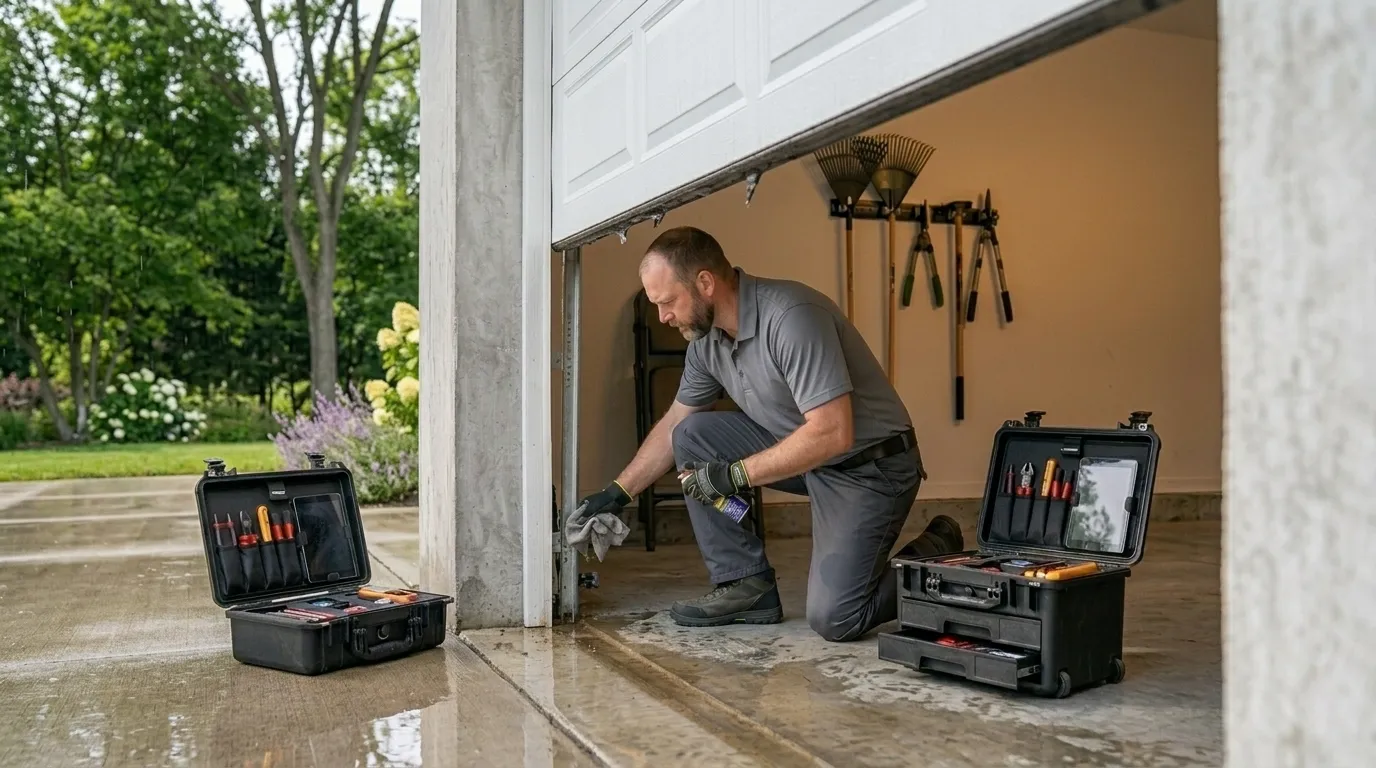
Not every seal problem needs a truck out here. If the bottom astragal is just a little flat from age but still makes contact along the slab, leave it through the season and watch it.
A lot of the doors we look at in this area sit on houses built between 1938 and 2000, median right around 1971, and the original vinyl on those doors has usually outlived what anyone expected of it. Flattened but intact is not the same as split or pulling away from the retainer.
What you shouldn't leave alone is a seal that's cracked along its length, hardened to the point it won't flex, or missing chunks where mice or salt have gotten to it. That's not draught-proofing anymore, that's an open gap under a door that's already fighting a cold-climate winter. If you can slide a flat hand under the door edge and feel outside air moving, the seal isn't doing its job regardless of how it looks.
We'll say plainly: swapping a bottom seal yourself is a reasonable weekend job if the track and header are square. Where it gets worse is side and top seal on doors from the 1960s-70s stock common across this area, where the jamb itself has shifted a little over fifty-plus years and a stock seal won't sit flush without shimming.
What the Weather Here Does to It
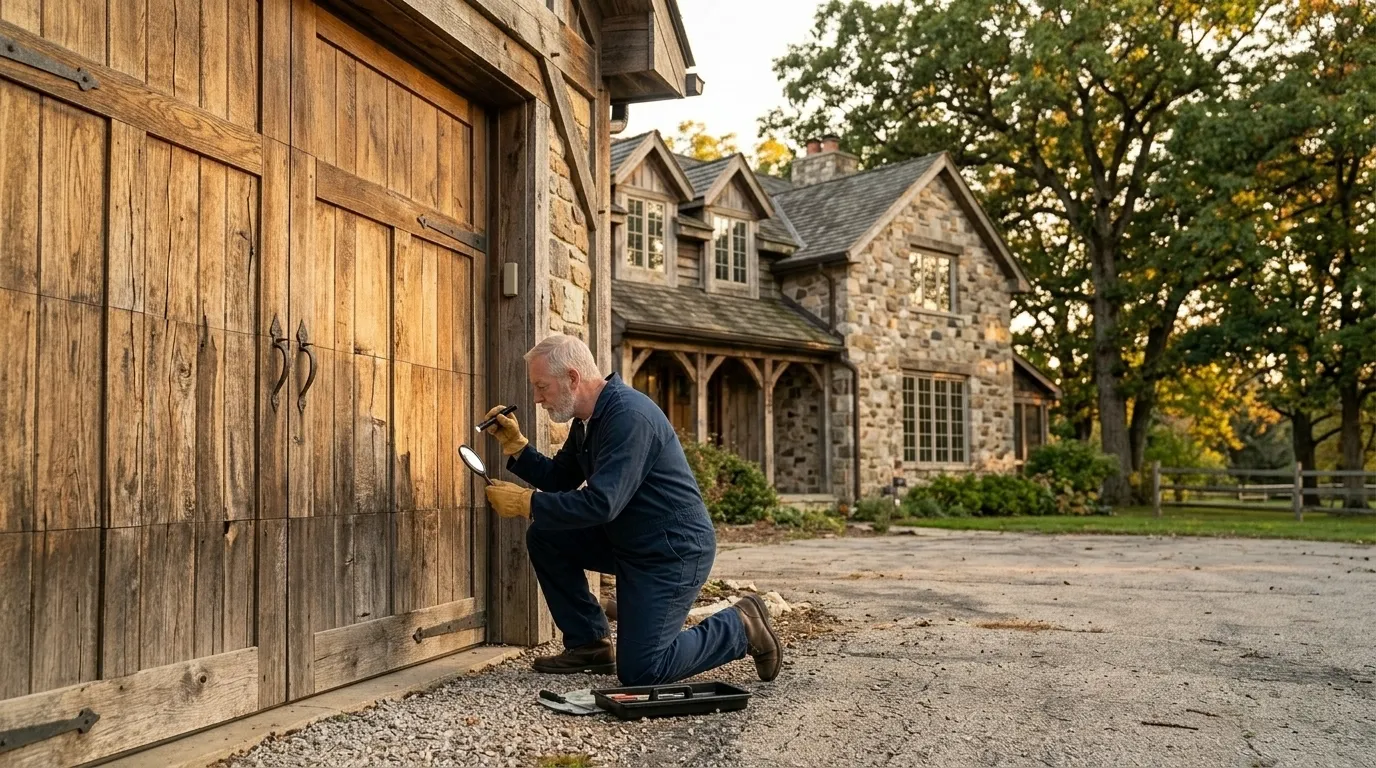
Milwaukee sits in a cold-severe climate band, and that's not a marketing phrase, it's what happens to rubber and vinyl. Seal material contracts hard in sustained cold, which is when a seal that looked fine in October starts pulling short of the slab in January, right when you need it most. Then the freeze-thaw cycling through the season works the material from the other direction, softening it in a thaw and re-hardening it overnight, which is what eventually splits a seal along its length rather than wearing it down evenly.
On a lot of the older builds in this service area, the slab itself has settled slightly over the decades, so the gap a seal has to bridge isn't uniform side to side anymore. A seal that's flush on one side and gapping a half inch on the other is a cold-climate problem specifically, because that gap doesn't just let in a draught, it lets in the meltwater and salt spray off the driveway, which then finds its way to the bottom of a wood-jamb door and starts the rot most owners don't notice until spring.
The Situation
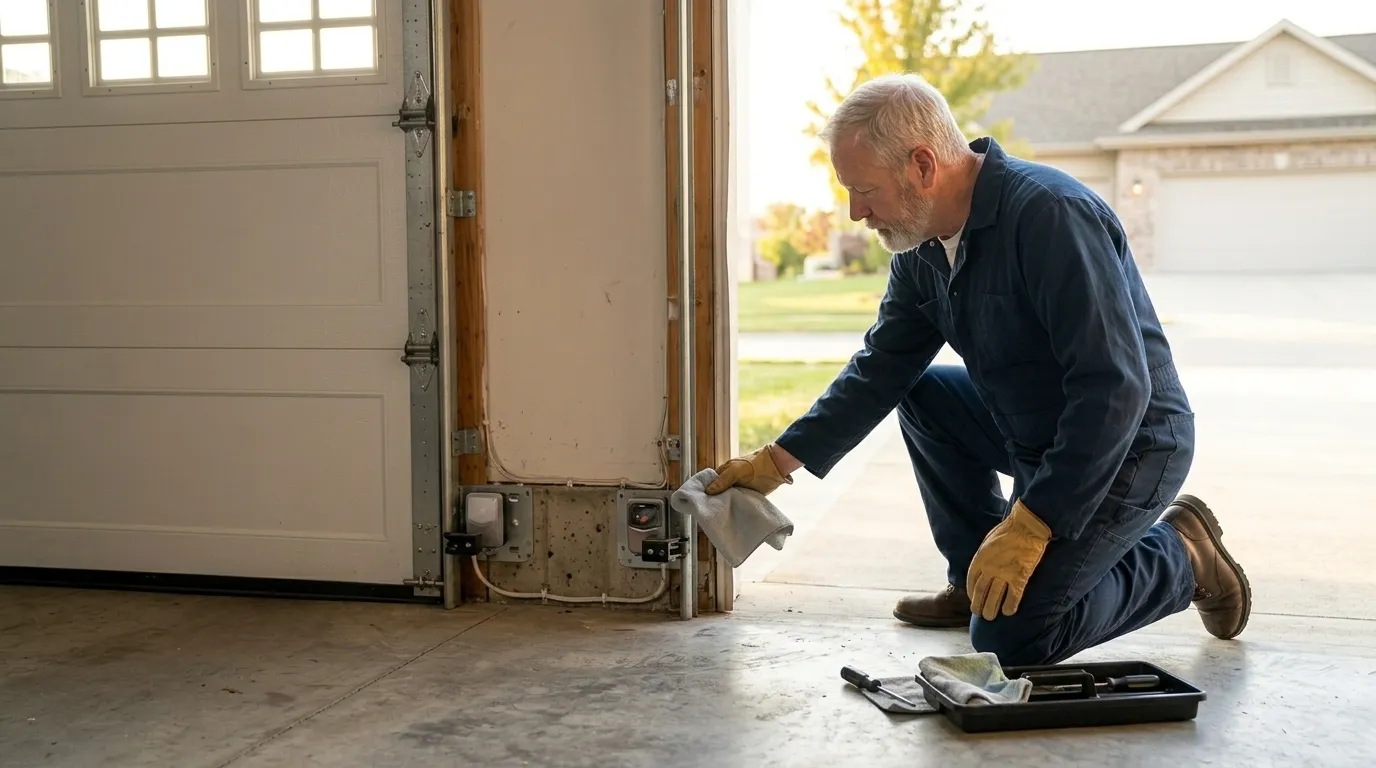
Across the 38 named areas we cover, from Wauwatosa and Shorewood a few miles out to Cedarburg and Grafton toward the edge of the service area, the housing stock skews to the 1960s and 70s, with the overall range running 1938 to 2000. That matters for seals specifically because door openings and jamb depths from that era were framed to a standard that's changed since, and a seal bought off a shelf today doesn't always sit the same way it did on the original hardware.
Houses closer in, around Avenues West, Riverwest, and the Historic Third Ward, tend to run older within that range, meaning more settling and more jamb irregularity to account for. Farther out toward Mequon or Muskego you're more often dealing with newer framing from later in that build window, where the fix is usually simpler because the opening is still square. Either way, the fix isn't the same seal everywhere in this area, and a shop that hands you one universal strip without checking the jamb is guessing.
What You Pay
We don't have a set number to give you here, and we're not going to invent one. What a seal job runs depends on whether it's a bottom astragal swap, a full side-and-top retainer replacement, or a jamb correction on an older opening, and those are different jobs with different material and labor. What we can tell you is that in a service area where median household income runs $102,097 across roughly 204,376 households, most owners we talk to would rather fix a seal properly once than patch it twice.
Ask for a number before anyone touches the door, and ask specifically whether it includes just material or the labor to correct a jamb that's shifted out of square. That second part is where estimates diverge the most on the older end of this area's housing stock.
How We Can Help
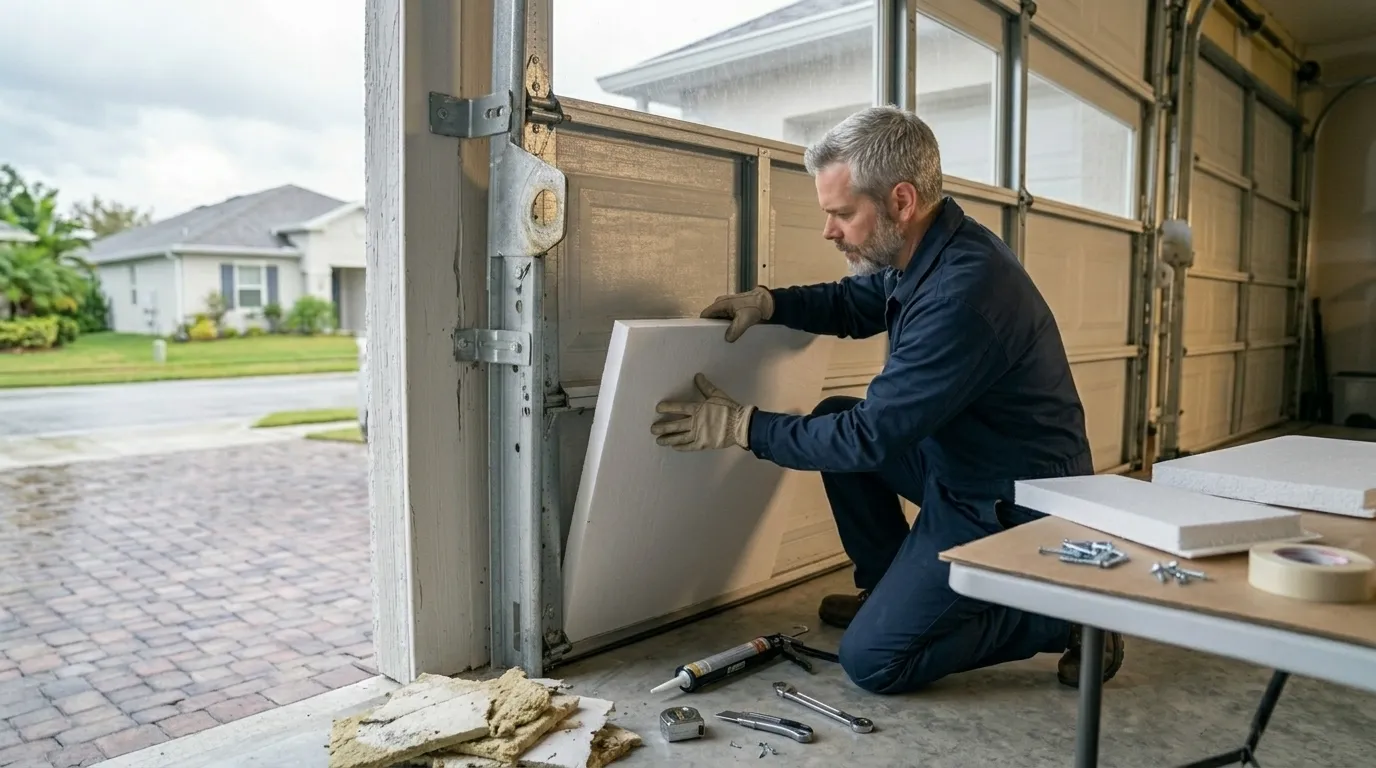
Garage Door Repair
Springs, cables, tracks, rollers, and openers fixed by a tech who explains the problem before touching anything.
Learn more →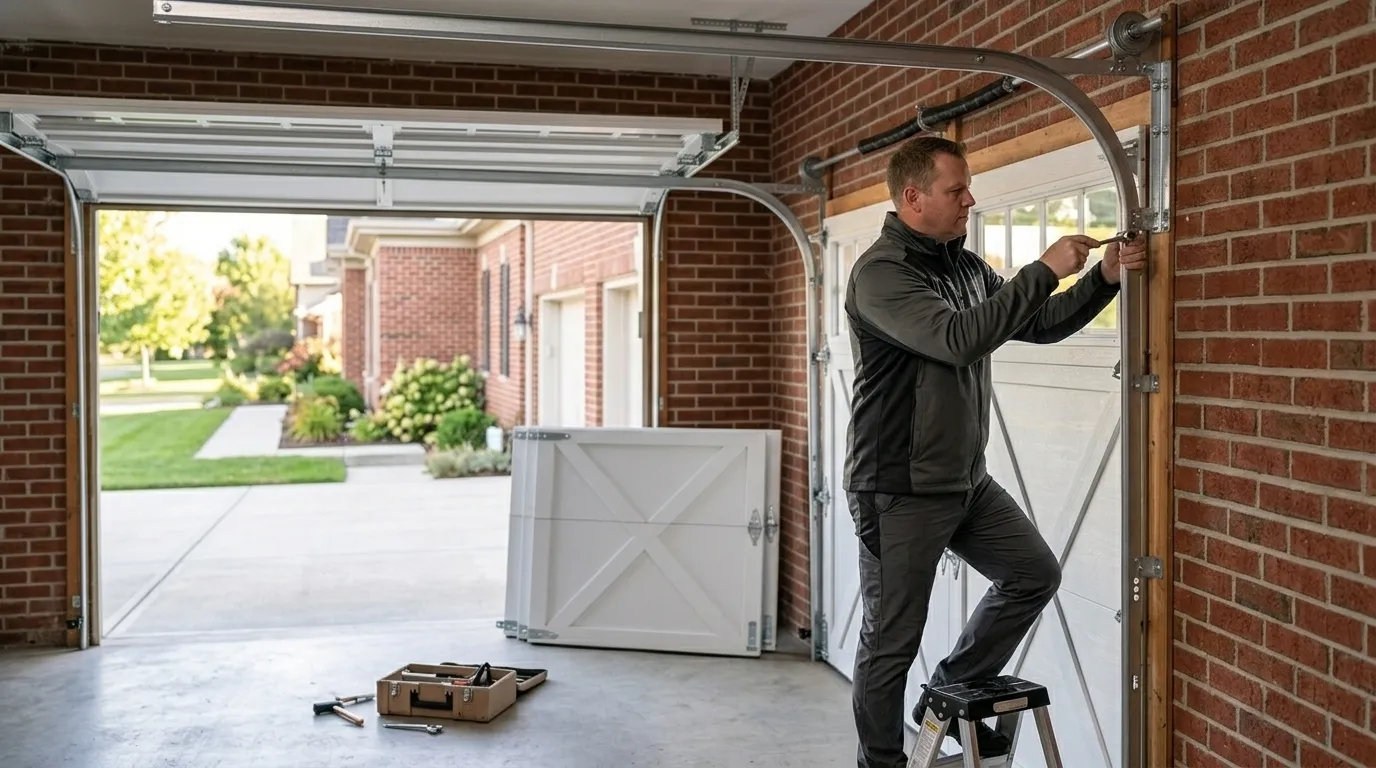
Garage Door Installation
New sectional doors sized and installed for the housing stock actually built in this area.
Learn more →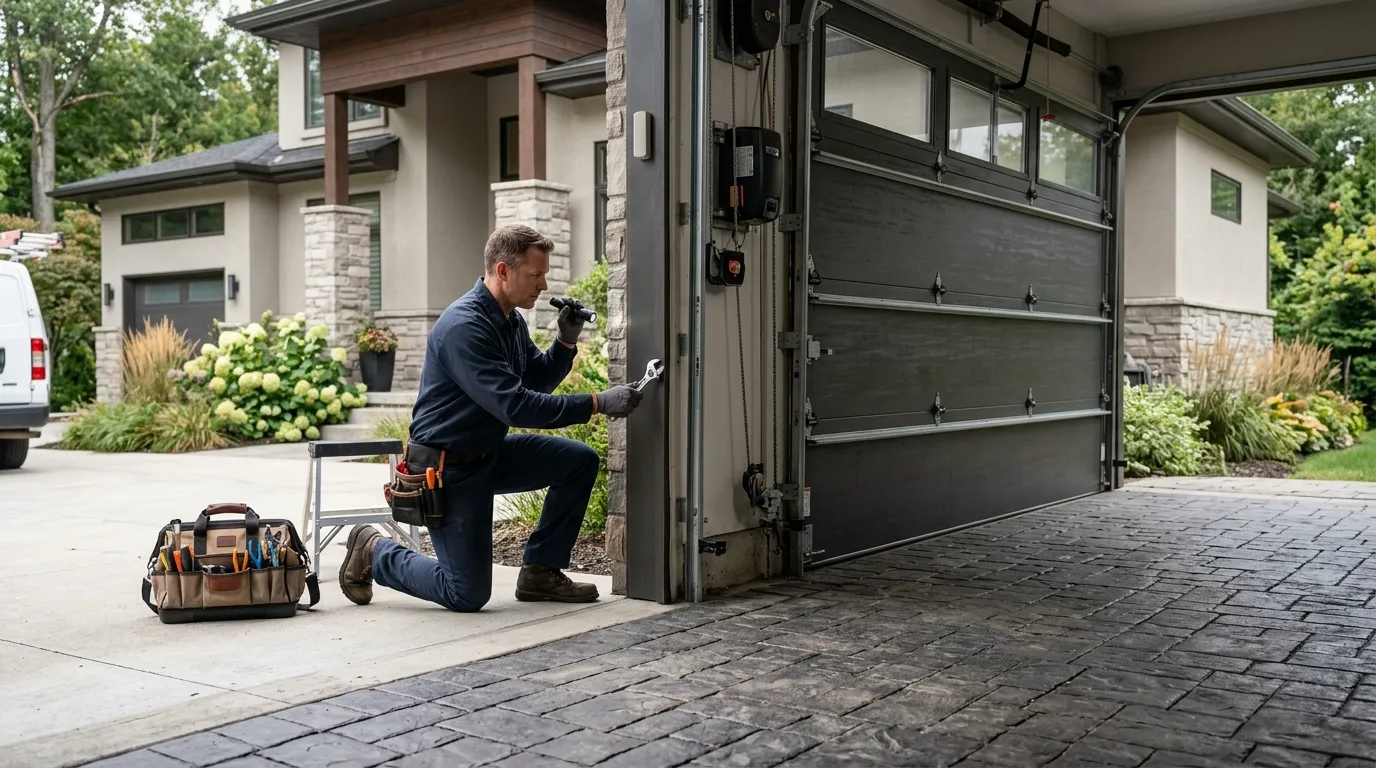
Garage Door Service
Tune-ups, lubrication, and safety checks that catch a small problem before it becomes a service call.
Learn more →Frequently Asked Questions
How do I know if it's the seal or the whole door that's letting in cold air?
Run a hand along the bottom and both sides while the door is closed at night. If you feel a draught concentrated at one edge, that's usually the seal. If you feel movement across the whole panel or hear rattling in wind, that's more likely the door itself flexing on its track, which a seal swap won't fix.
Does a bottom seal actually matter in a cold-severe winter like ours?
Yes, more than in a mild climate. Freeze-thaw cycling through a Milwaukee winter works seal material harder than steady cold would, which is why seals here tend to fail by splitting rather than just going flat over time.
My house is from the 1960s, will a standard replacement seal fit?
Often, but not always. Jambs on houses from that era have had fifty-plus years to settle, so the opening isn't always as square as it was originally. A standard seal can still gap on one side even when it's the right size on paper.
Have a Door That Needs a Second Opinion?
Call and describe what it is doing - we will tell you what it likely is.