
Milwaukee, WI
Service Areas
Where We Go From Our Milwaukee Shop
We run out of Milwaukee to towns like Wauwatosa, Shorewood, Glendale, and Whitefish Bay. See what the local housing stock means for your door and spring.
- Licensed & Insured
- Same-Area Service Calls
- Upfront Pricing
What Breaks Around Here
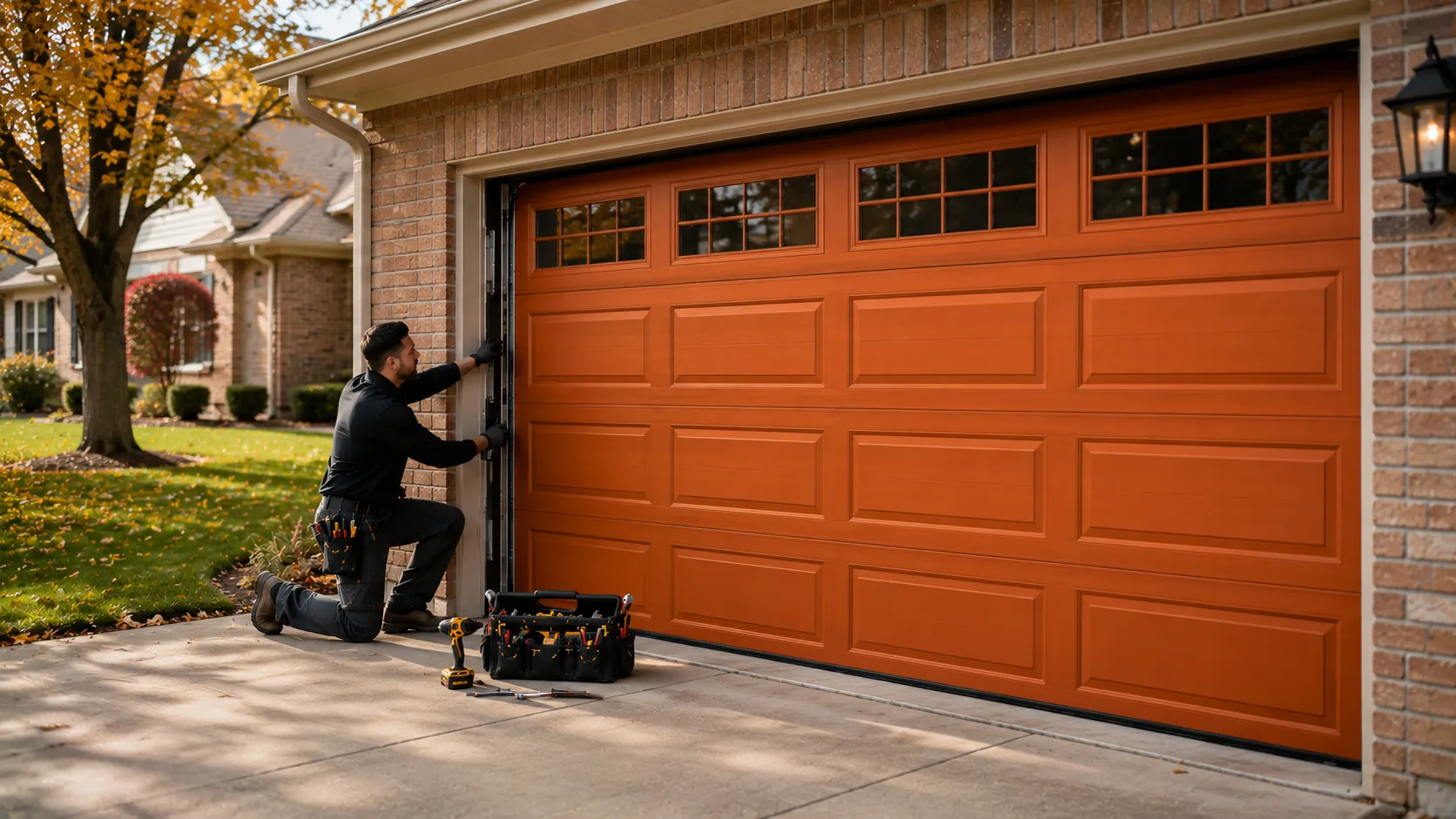
The failure on your door depends a lot on when the house went up, and this area spans a wide range. Housing across our service area was mostly built between 1938 and 2000, with the median around 1971, so you get a mix of eras rather than one dominant style. In the older neighborhoods closer to the city core - places like Harambee, Riverwest, and the Lower East Side - you still find original torsion setups from the 1940s and 50s that were never upgraded, with hardware nobody stocks off the shelf anymore.
Out toward the ring of inner suburbs (Wauwatosa, Shorewood, Glendale, Whitefish Bay, Elm Grove) the stock leans harder into the 1960s and 70s, which is when steel sectional doors with extension springs became the standard install. Extension springs age differently than torsion springs - they stretch and fatigue rather than fail all at once, so you get a slow rattle and sag before a full break. Farther out in newer pockets like Mequon, Pewaukee, or Germantown, doors tend to be younger and the more common calls are opener electronics and worn rollers rather than spring replacement.
None of this is a guarantee about any one house - a door gets replaced or a spring gets swapped regardless of the year the house was framed - but it's the pattern we see driving out to these calls.
Pricing, and What Drives It
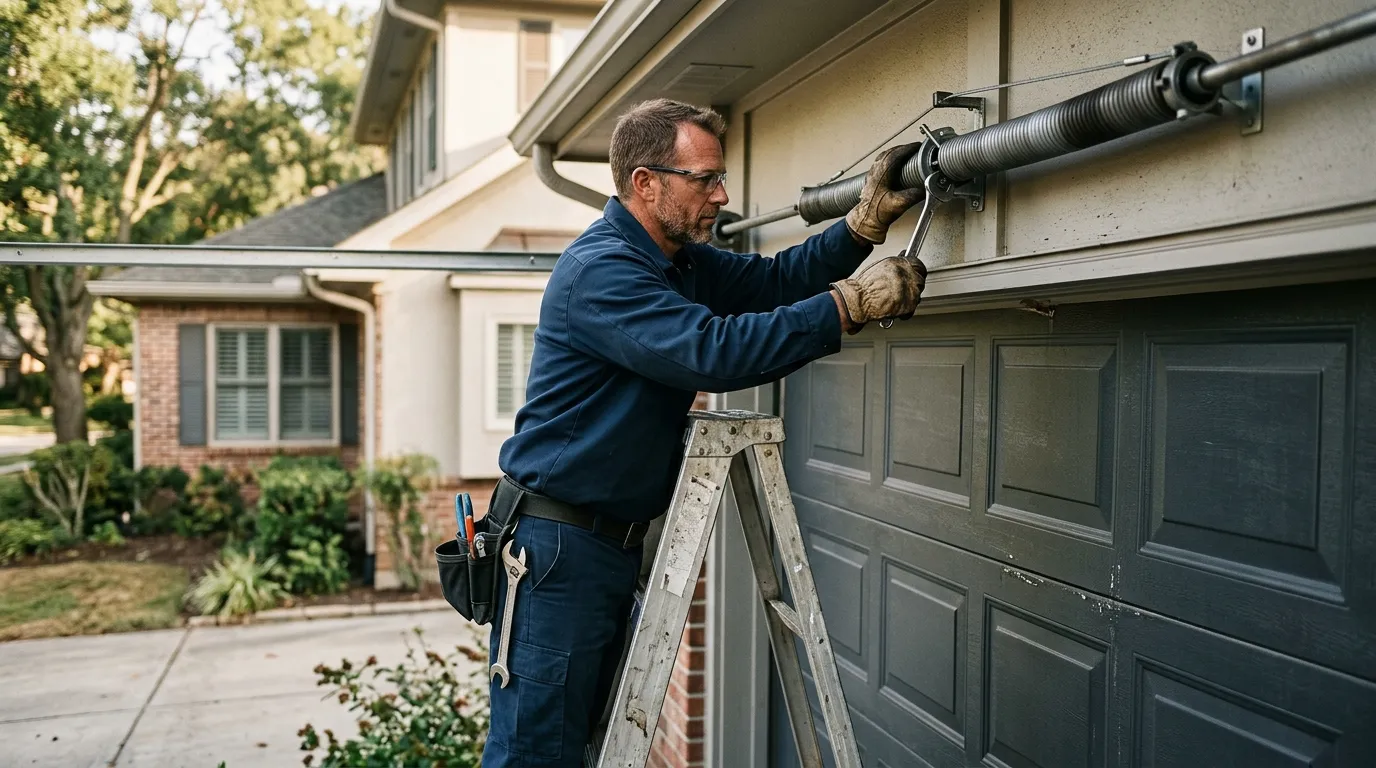
We don't post a flat number here because what a job costs depends on what's actually wrong, and that's tied to the same housing-era pattern above. A slow-fatiguing extension spring on a 1960s single door is a different job than replacing a stretched-and-seized torsion setup on a door original to a 1940s build. Wider, taller doors on newer construction in areas like Muskego or Franklin also change the parts list.
We're honest that we can't quote a repair over the phone without knowing the door's age, spring type, and what's failed - anyone who gives you a firm number sight unseen is guessing. What we can say is that the area's median household income sits around $102,097, which tells you this isn't a market where corners get cut on parts to hit a rock-bottom price; most owners here replace a spring correctly rather than patch it. One honest limit: if a door is old enough that parts are discontinued, replacement is usually cheaper than chasing custom hardware, and we'll tell you that up front instead of running up a repair bill.
The Area and Its Housing
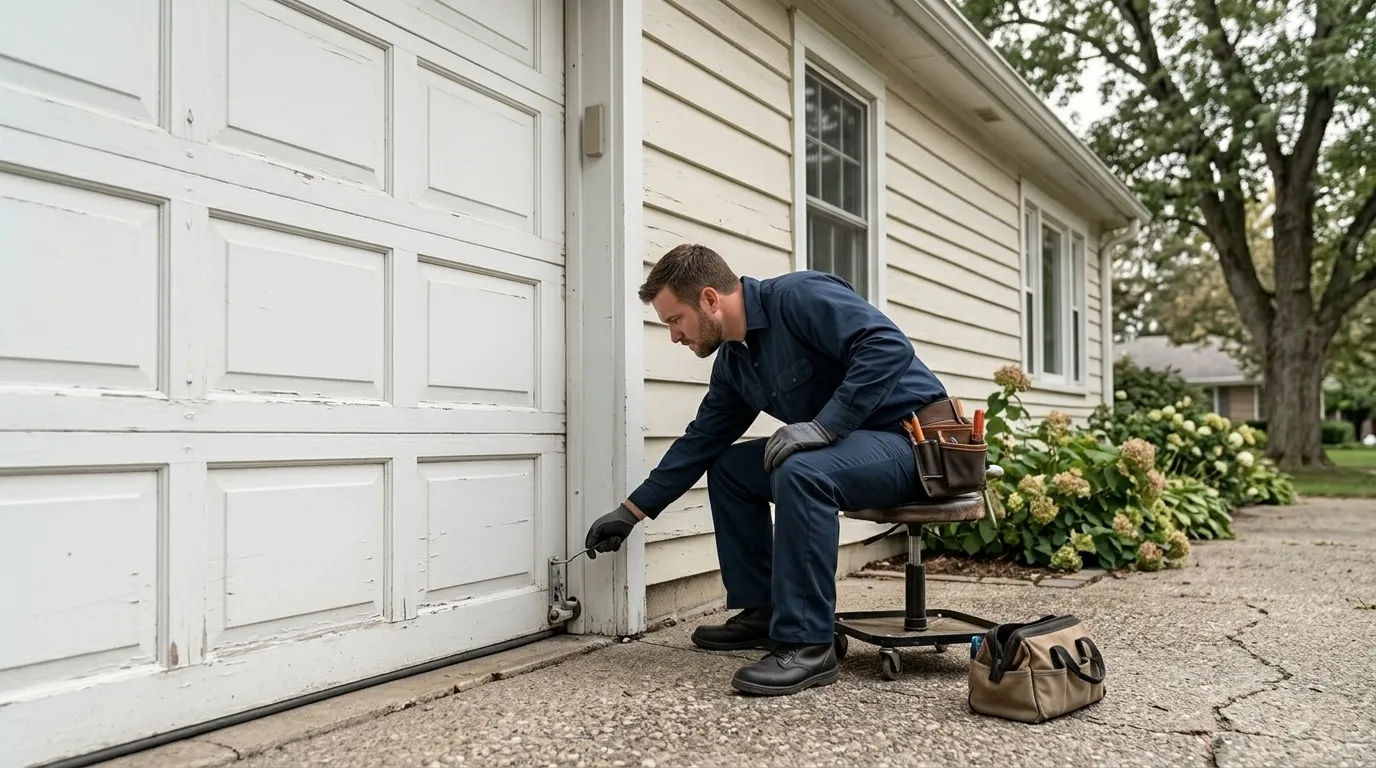
We're based in Milwaukee and drive out from there, so nothing here is a claim that we're located in these towns - just where the work takes us. Close in, within about 4 to 5 miles, you've got Wauwatosa, West Milwaukee, Shorewood, Glendale, and Whitefish Bay. A bit farther, 6 to 10 miles out, is Elm Grove, Butler, Fox Point, Greenfield, Brown Deer, River Hills, St.
Francis, Greendale, Bayside, Hales Corners, Cudahy, and Mequon. Beyond that, 12 to 18 miles, sits Lannon, South Milwaukee, Thiensville, Franklin, Sussex, Pewaukee, Germantown, Lisbon, Muskego, Cedarburg, Big Bend, and Grafton. Inside the city itself we also run calls to Avenues West, Menomonee Valley, Harambee, Westown, Juneau Town, Old North Milwaukee, Riverwest, the Lower East Side, Historic Third Ward, Silver Spring, Northpoint, and Menomonee River Hills East.
Across this whole service area there are roughly 204,376 households and about 100,460 owner-occupied houses - a lot of garage doors, built across six decades of different code and hardware standards, all sitting under the same cold-climate weather load.
Full Service Area Directory
P
V
Frequently Asked Questions
Do you have a location in my suburb?
No - we operate out of Milwaukee and drive to these areas as calls come in. We don't have a second shop in Wauwatosa, Shorewood, or any of the surrounding towns, just the one base we run every job from.
Why does the age of my house matter for a garage door repair?
Because the hardware installed depends on when the house was built. Housing here runs from 1938 to 2000, and a door from the 1950s often has torsion hardware that's been discontinued, while a 1970s door usually runs on extension springs that fail more gradually.
Can you give me a price without seeing the door?
Not honestly. Repair cost depends on spring type, door age, and what's actually failed, and those vary a lot across a service area with housing this spread out in age. We'd rather look at it than guess.
Does the cold weather here affect garage doors?
Yes - this is a severe cold climate, and cold makes springs more brittle and lubricant stiffer, which is part of why winter is a heavier call season regardless of the house's age.
Not Sure If We Cover Your Street?
Call and ask - we will tell you straight.