
Milwaukee, WI
Service
Garage Door Opener Installation, Milwaukee
Opener installs for Milwaukee's 1938-2000 housing stock, matched to cold-climate demands and older track and header setups found across the service area.
- Licensed & Insured
- Same-Area Service Calls
- Upfront Pricing
What Happens When You Call
-
1
Call or Request a Quote
Tell us what the door is doing and roughly how old the house is - that alone points us toward the likely part before a truck leaves.
-
2
On-Site Diagnosis
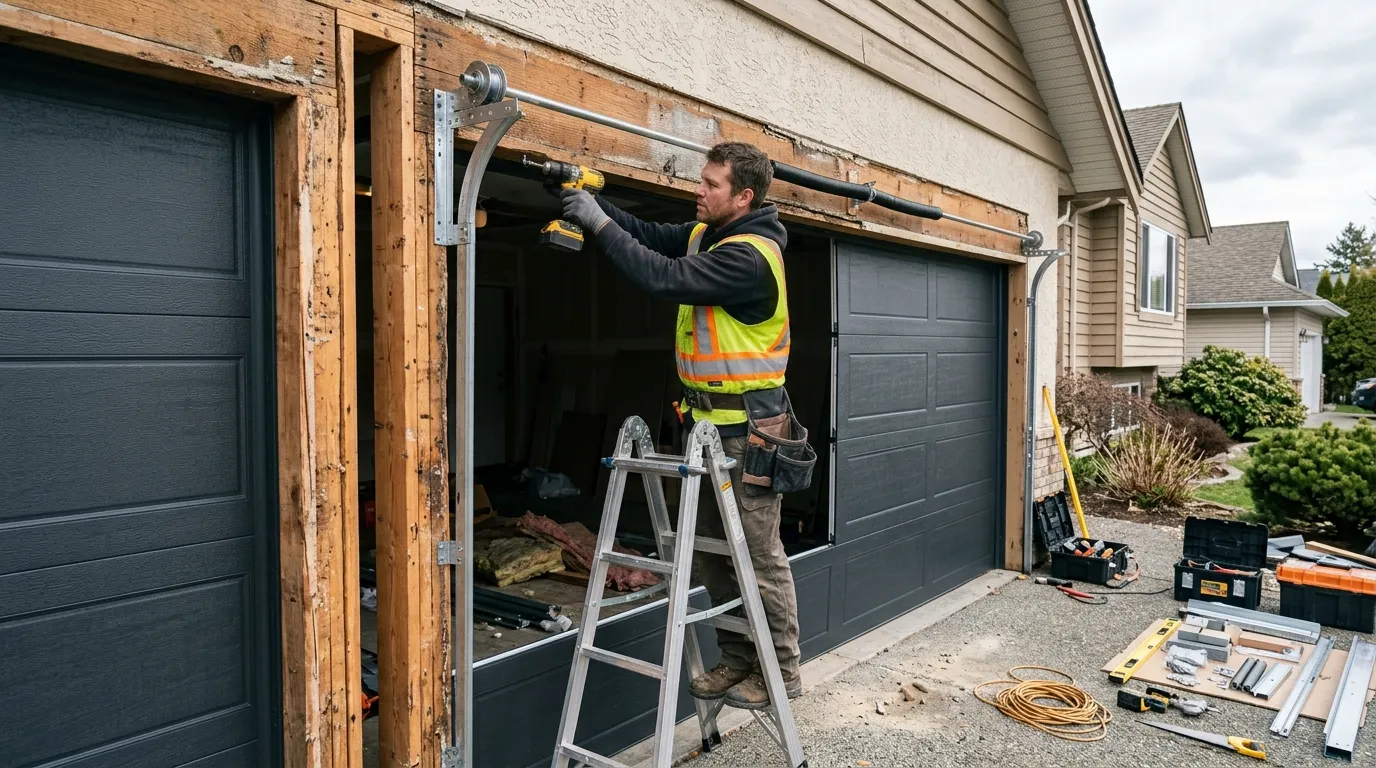
A tech checks the spring, cables, tracks, and opener in person and tells you plainly what is actually wrong.
-
3
Straight Price, No Surprises
You get a number before any work starts. It covers parts and labor, nothing added after the fact.
-
4
Fixed the Same Visit
Most repairs are done in one trip. If a part needs sourcing, we tell you that upfront instead of guessing.
Parts We Carry
Most of the openers we install in Milwaukee are chain-drive or belt-drive units rated for cold-weather operation, since the service area sits in a severe cold climate band and lubricant in a cheap unit stiffens up by January. We stock openers built for both standard headroom and the low-headroom setups common in houses built before the 1970s, when garages were framed tighter to the door track than builders frame today.
We also carry the brackets, reinforced struts, and longer rail sections that older doors need. A house built in the 1938-2000 range, which covers most of what's out there across the 38 named areas we work in, often has a door and track that were never designed to pair with a modern opener's mounting points. That mismatch is the single most common reason a DIY opener swap goes sideways - the rail doesn't sit square, or the header bracket has nothing solid to bite into.
What we don't stock: ultra-budget opener lines sold mainly through big box stores. We won't install one because the gearing wears fast in this climate and parts for them aren't available a year later. If you already bought one, we'll tell you straight whether it's worth putting up or returning.
What You Pay
We don't quote a number here because it depends on the door, the headroom, and whether we're replacing failed track hardware along with the opener - all of which we only know after we see the garage. What we can tell you is how the math tends to work in this market: median household income across the service area runs above $102,000, and most owners here choose a mid-tier belt-drive unit over the cheapest chain-drive option because the cost difference is small relative to how much longer the belt-drive lasts in cold-start conditions.
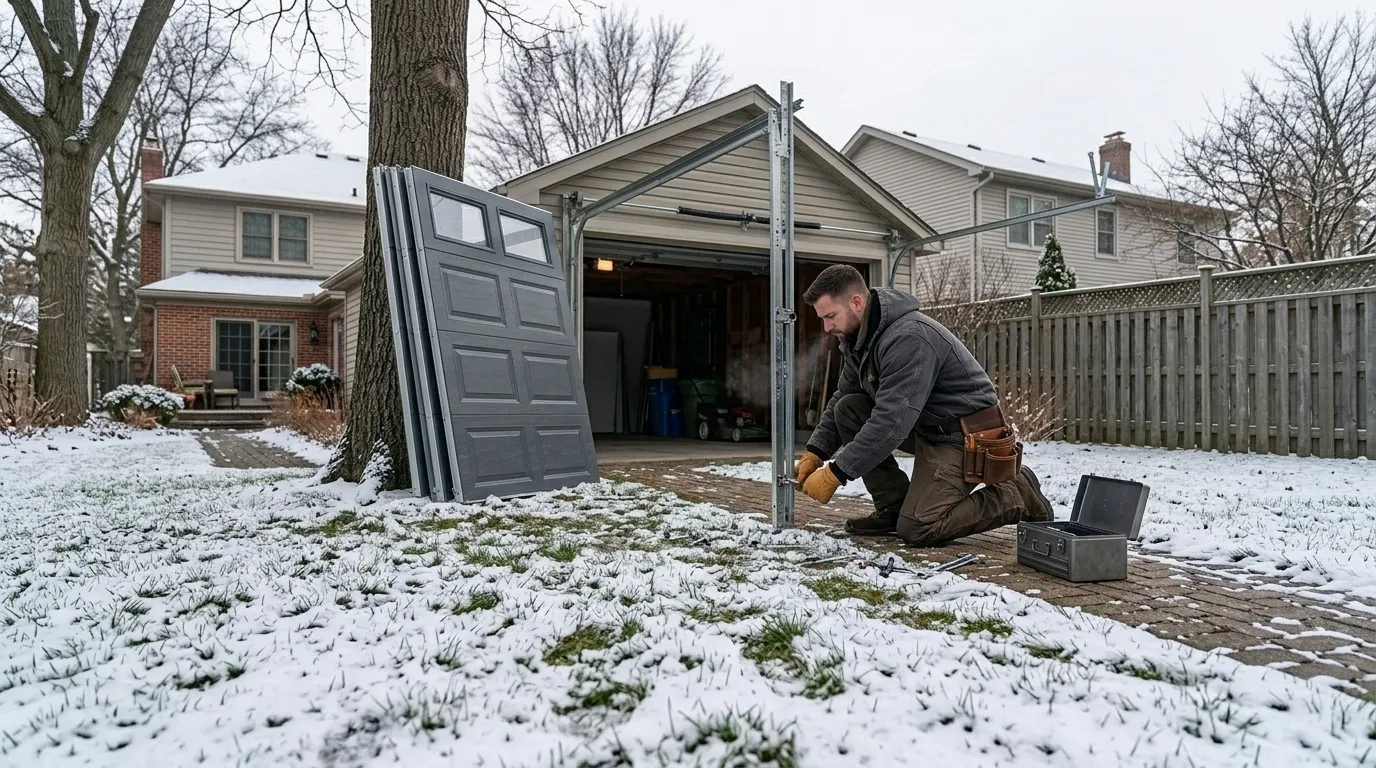
What drives the price up isn't usually the opener itself - it's what's underneath it. If your door is original to a house built decades ago, the rail, hinges, or torsion spring often need attention before an opener can be mounted correctly, and that's a separate line item, not a markup on the opener. We'll break that out for you before we start, not after.
We give a firm number on-site once we've looked at the header, the door weight, and the wiring run to your panel. Anyone quoting a fixed opener price over the phone, sight unseen, is guessing.
How It Shows Up
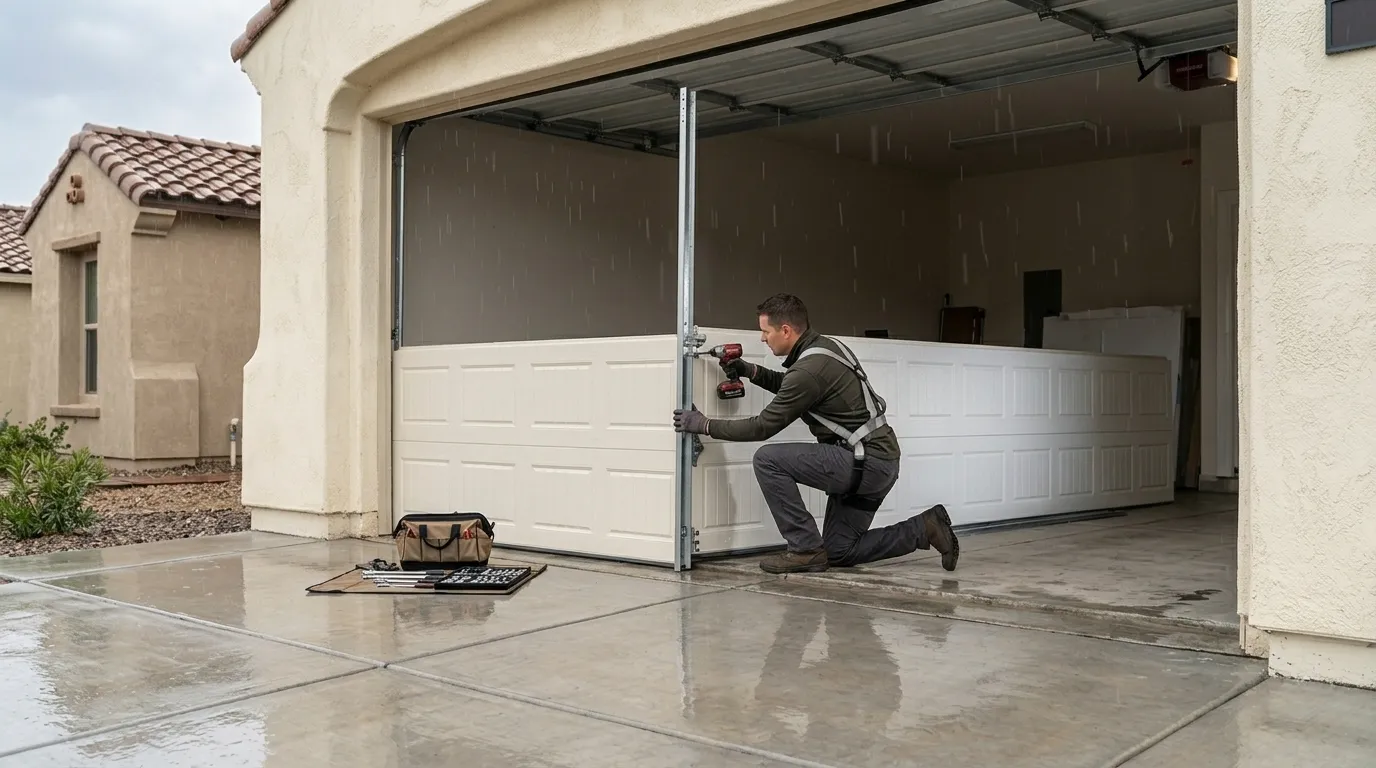
The most common call we get isn't "my opener died" - it's "my opener is straining" or "it opens but won't close all the way." On the older housing stock that makes up most of this area, built mostly through the 1960s and 70s, that strain usually traces back to a door that's gotten heavier over time as old wood panels absorb moisture, while the opener motor is still the original size for a lighter door.
In winter you'll hear it before you see it: a grinding start, a pause, then a slow crawl instead of a smooth pull. Cold grease in an aging gearbox is part of it, but so is a chain or belt that's stretched past what the tensioner can take up. By spring, the same unit that struggled all winter often just quits - not because winter broke it, but because winter was the load test it failed.
A safety-reversal that no longer stops on contact, or a wall button that doesn't respond, are both signs the opener's control board is failing, not just the motor. Neither is safe to keep running while you wait.
Why It Happens Here
This comes down to the age of the housing stock. With a median build year around 1971 and construction spanning 1938 to 2000, a large share of the roughly 100,460 owner-occupied houses across the service area still carry openers or door-and-track combinations sized for an earlier standard. Garage doors got heavier - insulated steel and double-layer panels replaced thin single-panel wood and light steel - but a lot of openers never got upgraded to match.
Then there's the cold. A severe cold climate band means real freeze-thaw cycling every winter, and that cycling is hard on chain tension, gear lubricant, and the plastic gears inside older opener units. An opener that's marginal in October usually fails outright by February, once the cold has stiffened the grease and the door's gotten harder to lift.
We see this pattern repeat across the older sections of the service area regardless of which named neighborhood or nearby town a house sits in - the fault follows the house's age and the winter, not the street.
Talk to a Technician Before You Book
Describe what the door is doing and get a straight answer on what it likely needs.
Jobs Like Yours
Recent work from this service line.
Why Milwaukee Calls Us
Frequently Asked Questions
Can I put a new opener on my old garage door without changing anything else?
Sometimes, but check the door's weight and the track condition first. A lot of houses in this area still have original track hardware from decades ago, and a modern opener paired with a worn track or undersized spring will strain and fail early. We check both before mounting anything.
Why does my opener struggle more in winter?
Cold grease in the gearbox and a chain or belt that's already stretched combine badly once temperatures drop. In a severe cold climate, that combination is what pushes a marginal opener from "working but noisy" to "dead" over a winter.
Do you install openers on doors you didn't sell?
Yes, as long as the door and track are in good enough shape to support a new opener. If they're not, we'll tell you what needs fixing first rather than mounting a new unit on a setup that will strain it.
How do I know if it's the opener or the door that's failing?
If the door moves easily by hand but the opener grinds, hesitates, or won't fully close, that points to the opener or its sensors. If the door itself feels heavy or uneven by hand, that's a door or spring issue we'd look at first.
Need Garage Door Opener Installation, Milwaukee?
Call now for straight answers on cost and timing.