Who Does the Work
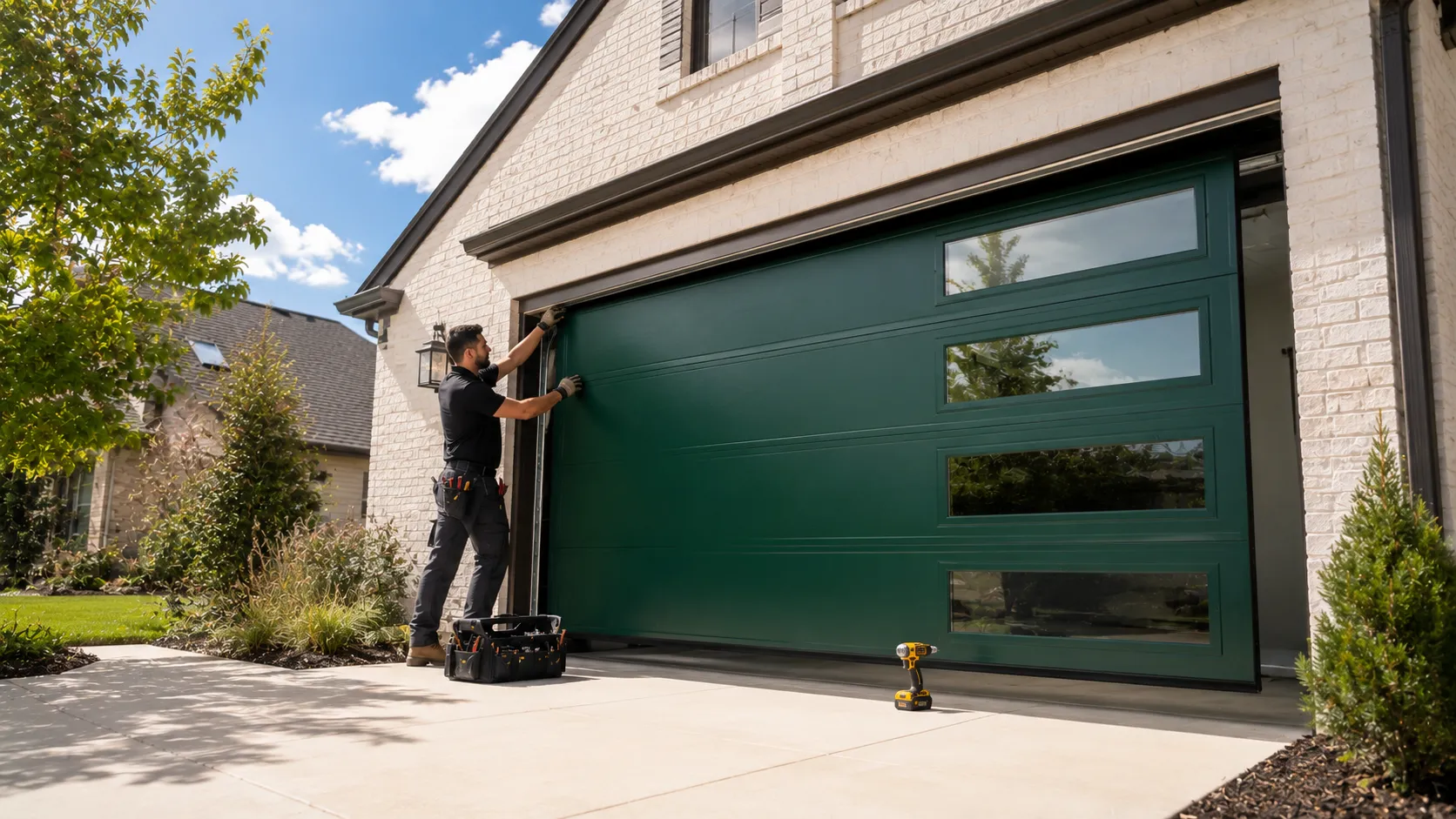
When you call, you're talking to someone who works on garage doors in this city, not a call center reading a script. We don't publish staff counts or truck numbers because that's not what tells you whether the job gets done right.
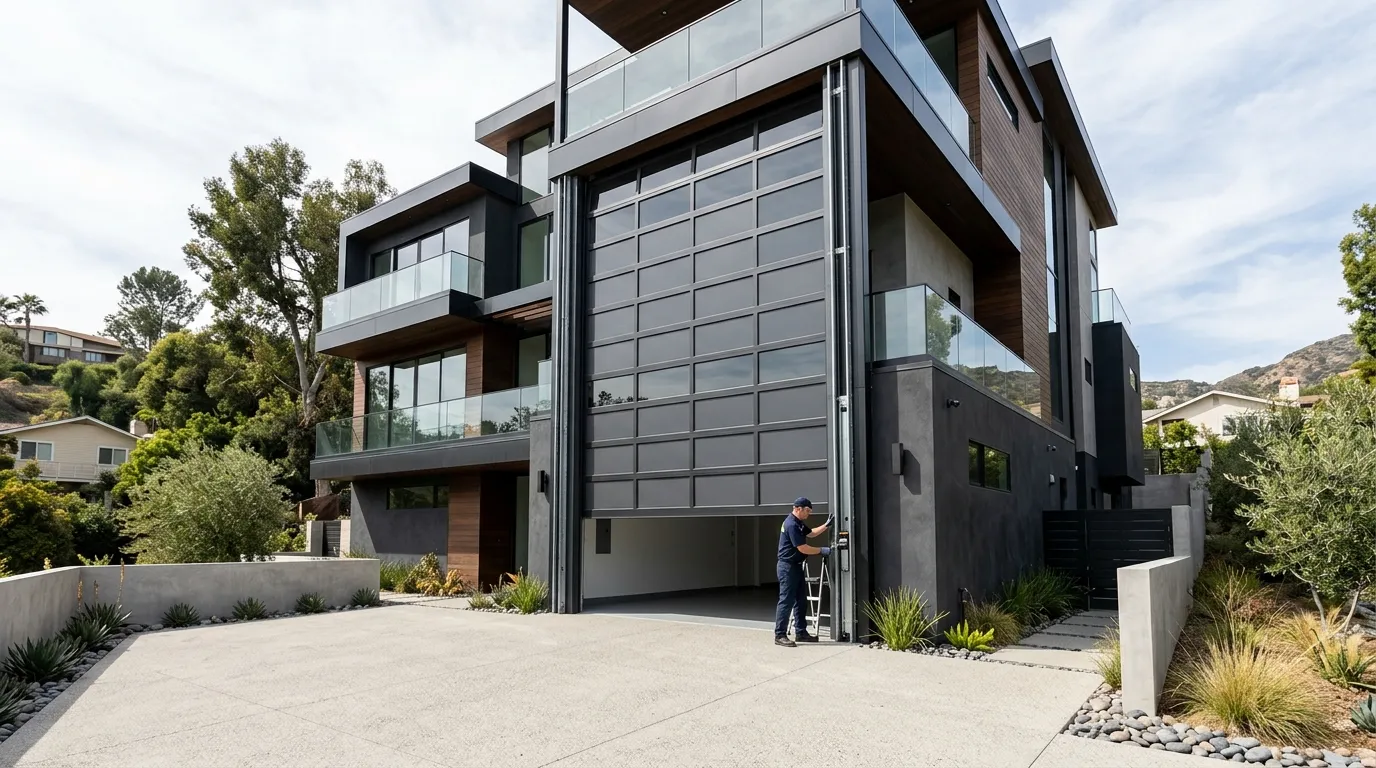
What matters more: the housing stock here runs old. Across the service area, homes were mostly built between 1938 and 2000, with the median landing around 1971, so a lot of what we open up is original hardware - springs, drums, and openers sized for a door that's been hanging on the same track for fifty years.
That matters for who shows up and what they're carrying. A tech working in Milwaukee needs to recognize a 1970s side-mounted torsion setup on sight, not just the current big-box door kit.
We don't claim a certification number or an award here because we don't have one to list, and we're not going to invent one. What we can tell you is that the work we do is on doors like the ones actually on your block, not a generic newer model.
The Work We Take On
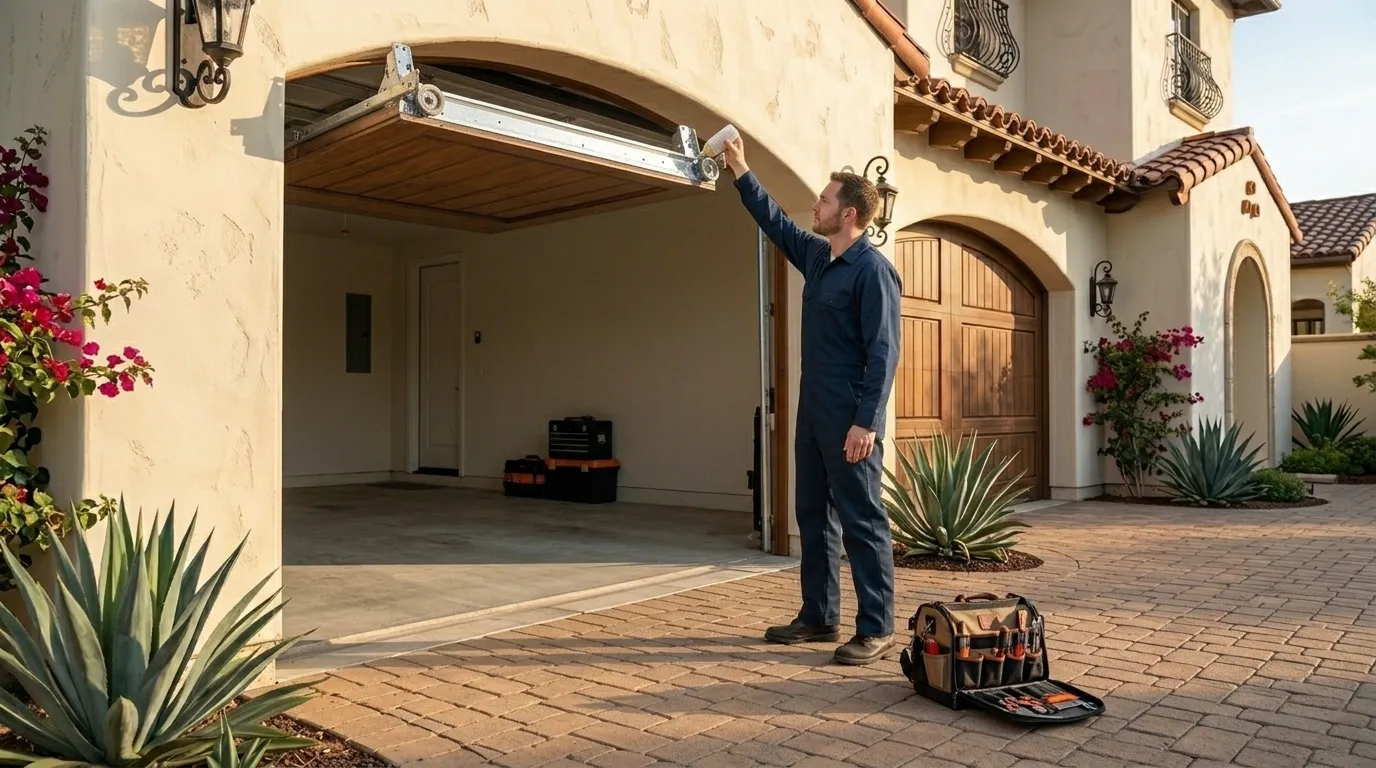
Broken torsion springs, cables off the drum, openers that grind but don't lift, rollers worn out of their track, panels dented from a backed-into car - that's the bulk of the calls. Given that so much of the local housing stock dates to the 1960s and 70s, we spend a fair amount of time on doors that don't match anything on a current parts shelf: single-piece doors, older extension spring setups, openers with no safety reversal at all.
Milwaukee sits in a climate band the federal data marks as cold and severe, and that shows up directly in spring failure. Steel contracts in deep cold, and a spring that's been fine all fall will snap on the first hard freeze because the metal's lost flexibility right when the door's heaviest to lift by hand. We see that pattern every winter.
Here's the honest limit: on the oldest one-piece doors, we sometimes can't get an exact replacement panel or track hardware quickly, since that stuff isn't stocked the way modern sectional door parts are. In those cases replacing the door is usually the faster and more sensible call than chasing a part that may take weeks.
What Comes Next
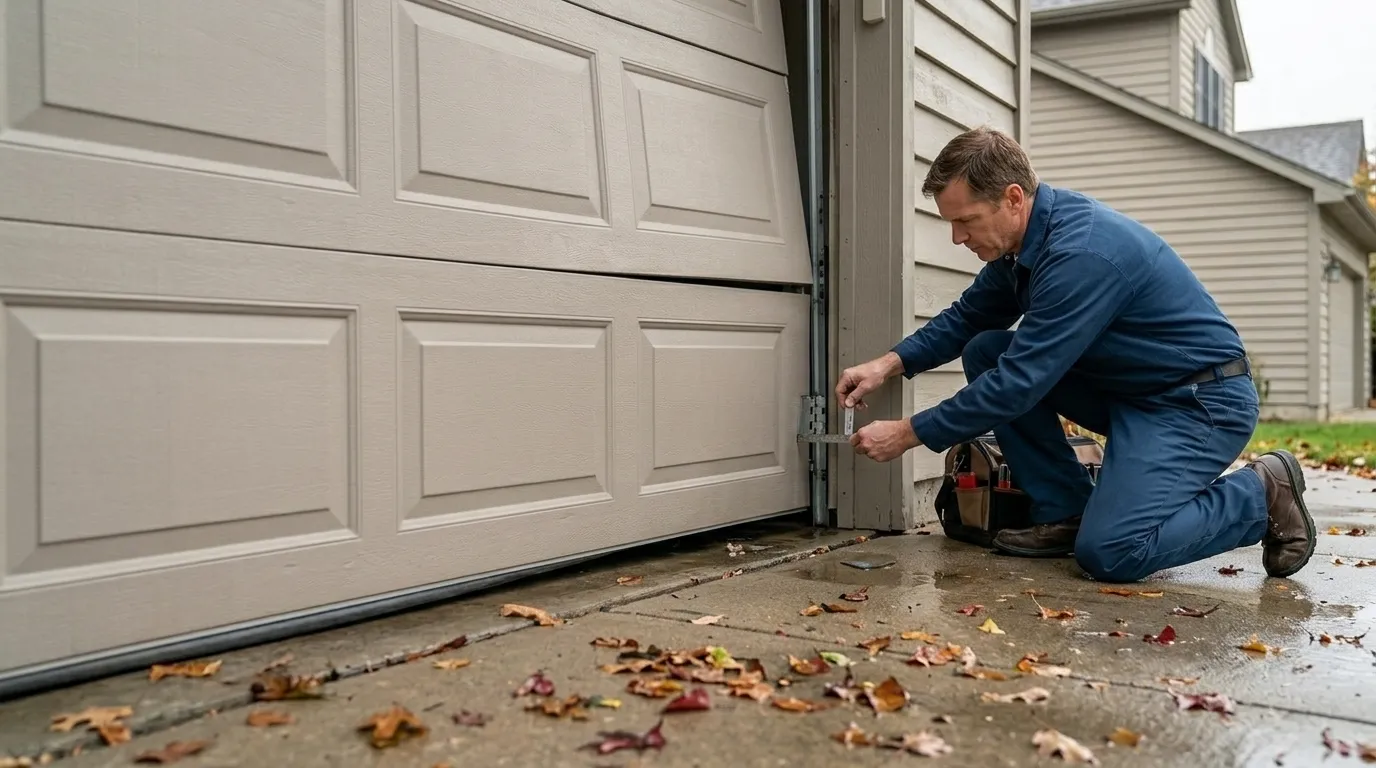
You call 14144138685, describe what the door's doing - won't open, opens crooked, opener runs but door doesn't move, whatever it is - and we get a read on whether it's a same-visit fix or something that needs a part ordered first. Springs, cables, and rollers are usually straightforward. A bent track or an opener that's failing electrically sometimes takes a second look before we know exactly what's needed.
We're at 111 E Wisconsin Ave, Milwaukee, WI 53202, and most of the work happens at your house, not ours. Given the age of a lot of the doors we're called out on - original to homes built well before 2000 - we try to be upfront early if a repair isn't worth it compared to replacing the door outright. A cracked wood panel on a forty-year-old door with a worn-out opener is often past the point where patching makes financial sense, and we'll say so rather than stack repairs on a door that's done.
The Areas We Cover
We work in and around Milwaukee, including neighborhoods like Avenues West, Menomonee Valley, Harambee, Westown, Juneau Town, Old North Milwaukee, Riverwest, Lower East Side, Historic Third Ward, Silver Spring, Northpoint, and Menomonee River Hills East, plus the surrounding suburbs - Wauwatosa and West Milwaukee about 4 miles out, Shorewood also 4 miles, Glendale and Whitefish Bay around 5, Elm Grove and Butler near 6, Fox Point and Greenfield about 7, Brown Deer, River Hills, and St. Francis near 8, Greendale and Bayside about 9, Hales Corners at 9, and farther out toward Cudahy, Mequon, Thiensville, South Milwaukee, Franklin, Sussex, Pewaukee, Germantown, Lisbon, Muskego, Cedarburg, Big Bend, and Grafton.
Across that footprint, the service area holds roughly 204,376 households and 100,460 owner-occupied houses, with a median household income around $102,097 - a mix that runs from dense city blocks close to downtown out to larger suburban lots twelve to eighteen miles out. Door sizes, opener types, and how a job gets scheduled can shift some depending on which end of that range you're on, so it's worth mentioning your neighborhood when you call.