
Milwaukee, WI
Service
Garage Door Installation in Milwaukee
Garage door installation for Milwaukee homes built 1938-2000, matched to older torsion hardware and rated for Wisconsin's severe cold winters and snow load.
- Licensed & Insured
- Same-Area Service Calls
- Upfront Pricing
What Happens When You Call
-
1
Call or Request a Quote
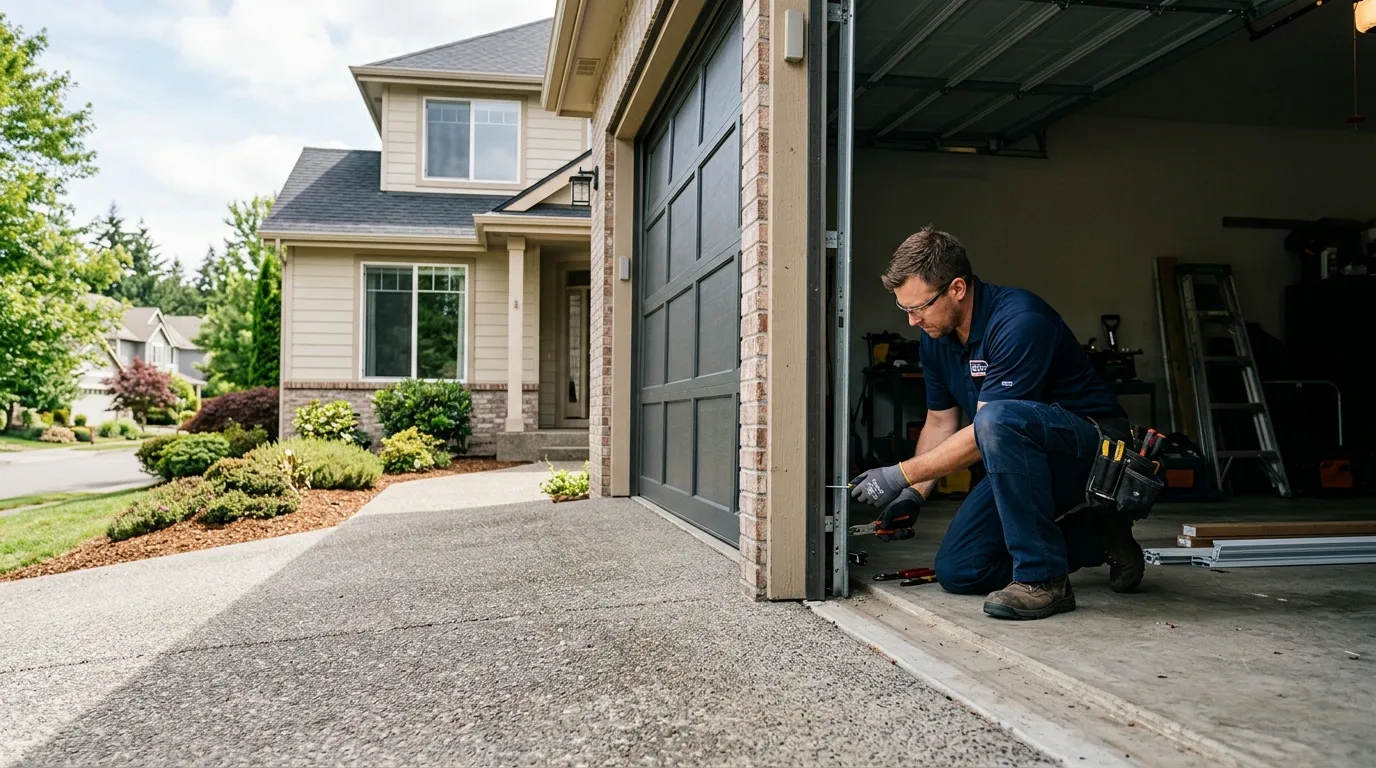
Tell us what the door is doing and roughly how old the house is - that alone points us toward the likely part before a truck leaves.
-
2
On-Site Diagnosis
A tech checks the spring, cables, tracks, and opener in person and tells you plainly what is actually wrong.
-
3
Straight Price, No Surprises
You get a number before any work starts. It covers parts and labor, nothing added after the fact.
-
4
Fixed the Same Visit
Most repairs are done in one trip. If a part needs sourcing, we tell you that upfront instead of guessing.
Parts We Carry
Most of what we install replaces doors that went up when Milwaukee's housing stock was going in - median build year 1971, with a lot of that concentrated in the 1938-2000 range. That matters because older garages weren't framed to today's standard openings. A lot of single-car bays in neighborhoods like Old North Milwaukee, Riverwest, and Harambee run narrower and shorter than what a big-box door comes in off the shelf, so we carry doors in the shorter panel heights those openings actually need, not just the modern default.
On the hardware side, we put in torsion spring systems rated for this climate band - cold-severe means steel that's cycling through freeze-thaw needs to be sized for it, not just sized for the door's weight. Insulated steel is what we push for anyone finishing that garage bay or sharing a wall with living space, since an uninsulated single-layer door in a Milwaukee winter does almost nothing to hold heat. One limitation: we don't stock every custom width on the truck.
If your opening is an odd size from a home built well before code standardized garage dimensions, that's a special order, and it adds lead time we can't shrink.
What You Pay
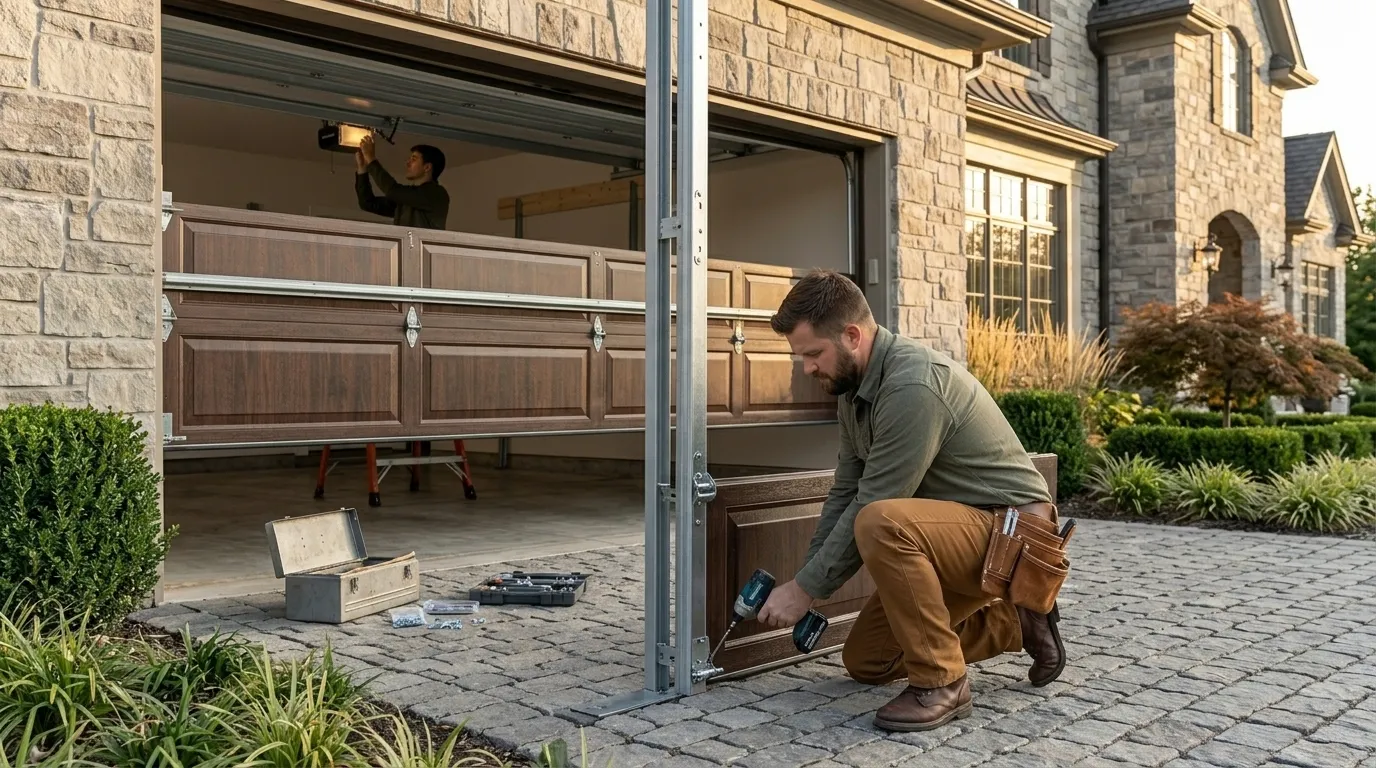
We're not going to put a number here that isn't backed by an actual look at your opening, because the range is wide and driven by real variables, not markup. The two biggest cost drivers we see across this service area are door size and insulation level - a garage built to 1960s-70s dimensions with a narrower single-car opening costs less to fill than a modern double, but if the original framing needs reinforcement to carry a heavier insulated door, that's added labor.
With median household income here at $102,097, we get plenty of homeowners who want the insulated option upfront rather than patching an old door twice - over a Milwaukee winter, the fuel cost difference is real, even if we can't quote you a dollar figure on it. What we can tell you honestly: if your opening needs header work because the house has settled, or if the track has to be reset because the slab isn't level anymore, that's a separate line item and we'll walk you through it before anything's ordered, not after.
How It Shows Up
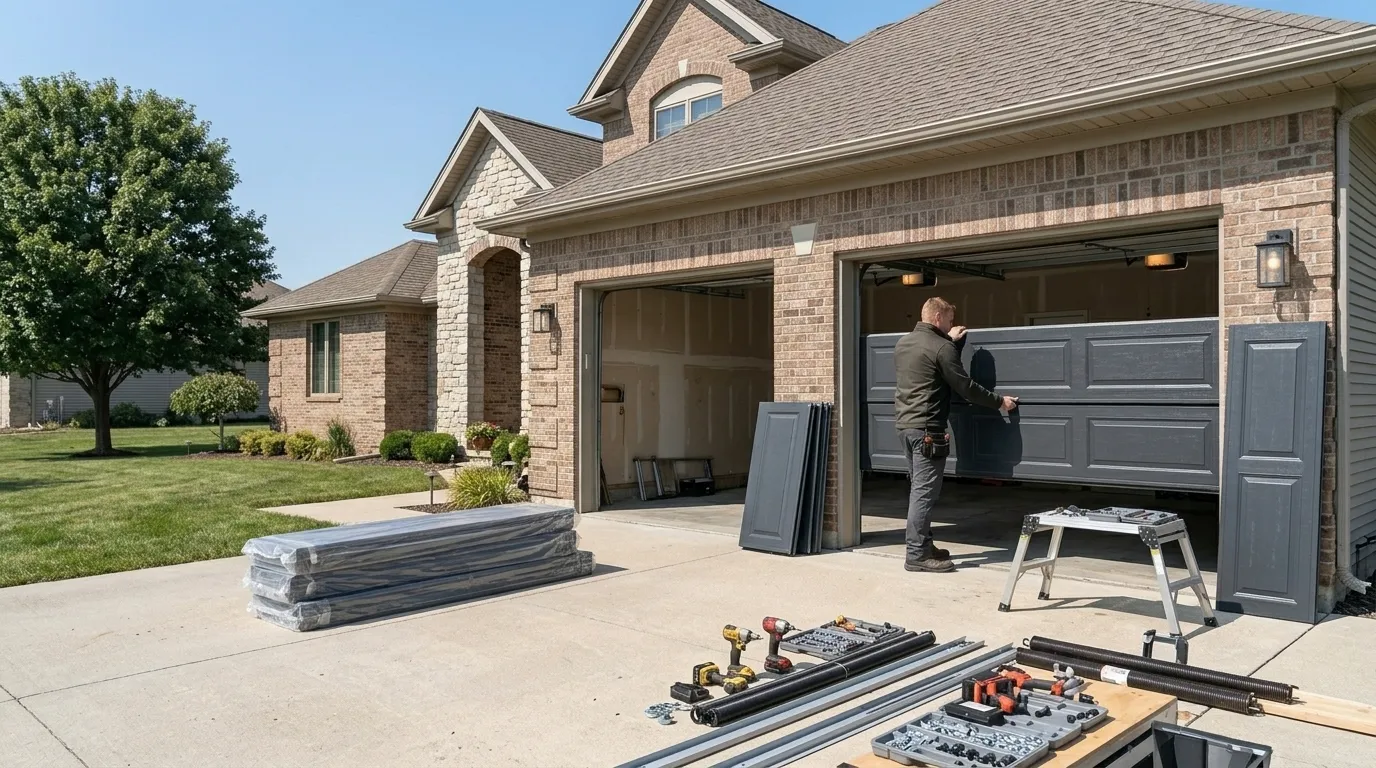
The call we get most from owners in older sections of the city isn't a broken spring - it's a door that's still technically working but costing them heat and starting to bind on the track. Houses built in that 1938-2000 window, especially the 1960s-70s cluster that makes up a big share of this city's stock, often still have their original single-layer door, and after enough winters the panels have started to bow or the seams have gapped enough that daylight shows underneath. Another pattern: doors sized for garages that were framed before anyone thought about insulation or modern opener clearance, so a homeowner wants to widen or raise the opening at the same time as replacing the door - that's a bigger job than a swap-out.
Less common but real: settling in older foundations has pulled the track out of plumb, so a new door goes in and immediately doesn't seal right until the track gets reset first. We flag that before install, not after, because a door that goes in against a bad track will fail again fast.
Why It Happens Here
This isn't a generic wear-and-tear story - it's the housing stock. With a median build year of 1971 and most garages across the 38 named areas we work in dating from that 1960s-70s wave, the original doors were built to a standard that predates modern insulation expectations and modern spring cycle ratings.
Milwaukee's climate band is classified severe cold, which means steel hardware here goes through more freeze-thaw stress per winter than it would in a milder region, and a door or spring rated for a general climate wears out faster than one rated for this one. Add to that a service area with over 100,460 owner-occupied houses, a lot of them at or past the age where the original door is due for replacement rather than another repair, and you get a steady, predictable pattern of installs tied directly to when this city was built, not to any one bad batch of hardware.
Talk to a Technician Before You Book
Describe what the door is doing and get a straight answer on what it likely needs.
Other Ways We Can Help
Jobs Like Yours
Recent work from this service line.
Why Milwaukee Calls Us
Frequently Asked Questions
How do I know if I need a new door instead of a repair?
If the panels are bowing, the seams have gapped, or you're replacing the same spring or roller more than once a year, it's usually cheaper long-term to install a new insulated door than keep patching an original one, especially in an older Milwaukee garage with a single-layer door from the 1960s-70s build era.
Will a new door fit my garage's original opening?
Often, but not always. Homes built here between 1938 and 2000 have openings sized to standards that have changed over time, so we measure before ordering. Some older single-car bays need a shorter panel height than what's stocked standard, which we carry, but unusual widths can mean a special order.
Does insulation actually matter for a Milwaukee garage?
Yes, more than in a milder climate. This area sits in a severe cold band, so an uninsulated door loses heat fast enough to affect an attached wall or a finished room above the garage. If the garage shares a wall with living space, insulated steel is worth the added cost over a basic door.
Why does the track need work when I'm just replacing the door?
In older sections of the city, foundation settling over decades can pull a track slightly out of plumb. A new door installed on a track that isn't reset will bind or fail to seal properly, so we check alignment before install rather than assuming the old track is still square.
Need Garage Door Installation in Milwaukee?
Call now for straight answers on cost and timing.