
Milwaukee, WI
Service
Garage Door Repair for Milwaukee's Older Housing Stock
Torsion springs, rollers, and openers sized for Milwaukee's 1938-2000 housing stock and cold winters. Same service area from Bayview to Brown Deer.
- Licensed & Insured
- Same-Area Service Calls
- Upfront Pricing
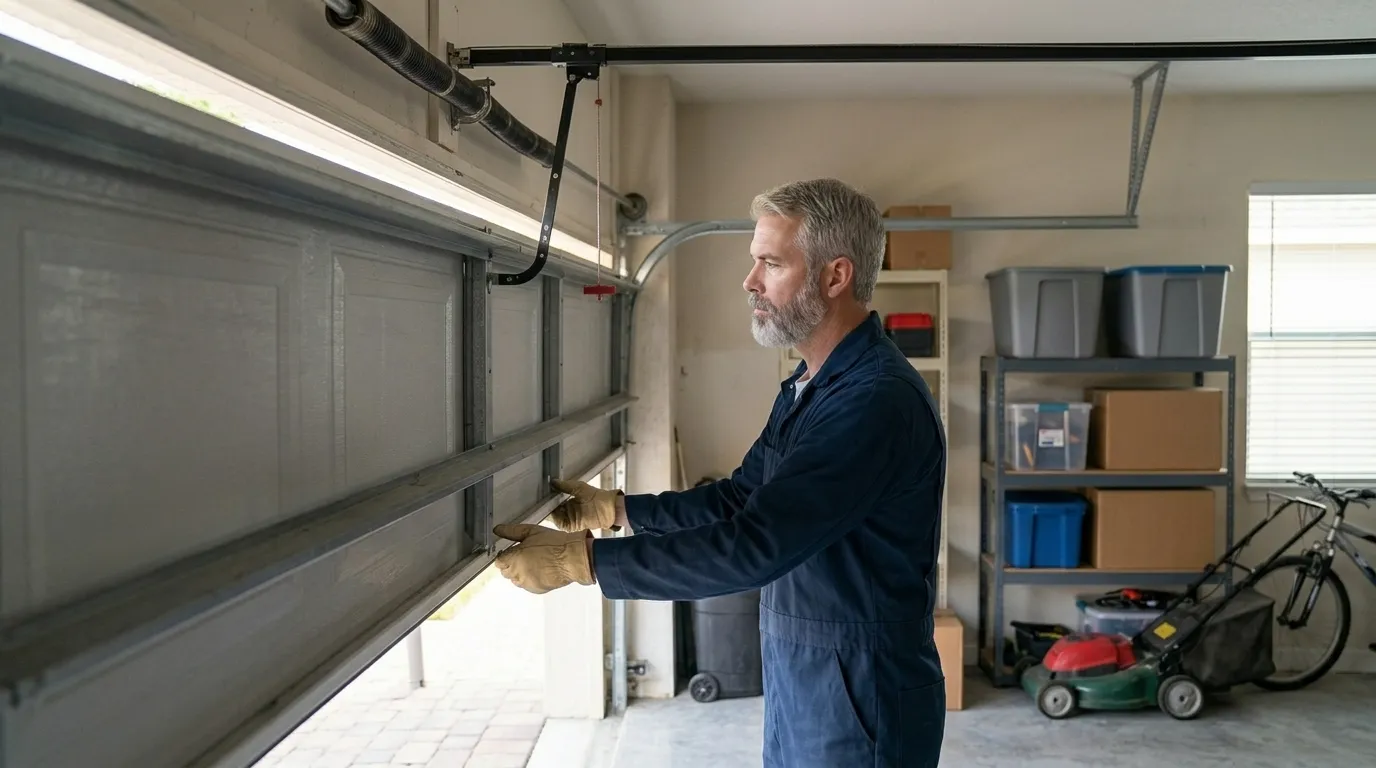
What Happens When You Call
-
1
Call or Request a Quote
Tell us what the door is doing and roughly how old the house is - that alone points us toward the likely part before a truck leaves.
-
2
On-Site Diagnosis
A tech checks the spring, cables, tracks, and opener in person and tells you plainly what is actually wrong.
-
3
Straight Price, No Surprises
You get a number before any work starts. It covers parts and labor, nothing added after the fact.
-
4
Fixed the Same Visit
Most repairs are done in one trip. If a part needs sourcing, we tell you that upfront instead of guessing.
Parts We Carry
Most of the calls we run are for doors that went in when the house was built, and across Milwaukee that means anywhere from 1938 to 2000, with the median landing around 1971. That's a lot of original torsion springs, steel-frame extension setups, and single-layer panel doors still hanging on drums and cables that haven't been touched since Nixon was in office. We stock torsion springs in the sizes that actually match 1960s and 1970s track hardware, not just the current big-box standard, because a mismatched spring on old hardware is how a door ends up slamming shut.
We carry rollers - nylon and steel - extension cables, torsion drums, and openers that bolt onto older rail systems without a full rail swap. What we don't carry is every obsolete panel design from a manufacturer that stopped making replacement skins decades back. If your door is a genuine 1960s original panel that's cracked or rusted through, sometimes the honest fix is a new door section, not a patch, and we'll tell you that instead of forcing a part that won't hold.
What You Pay
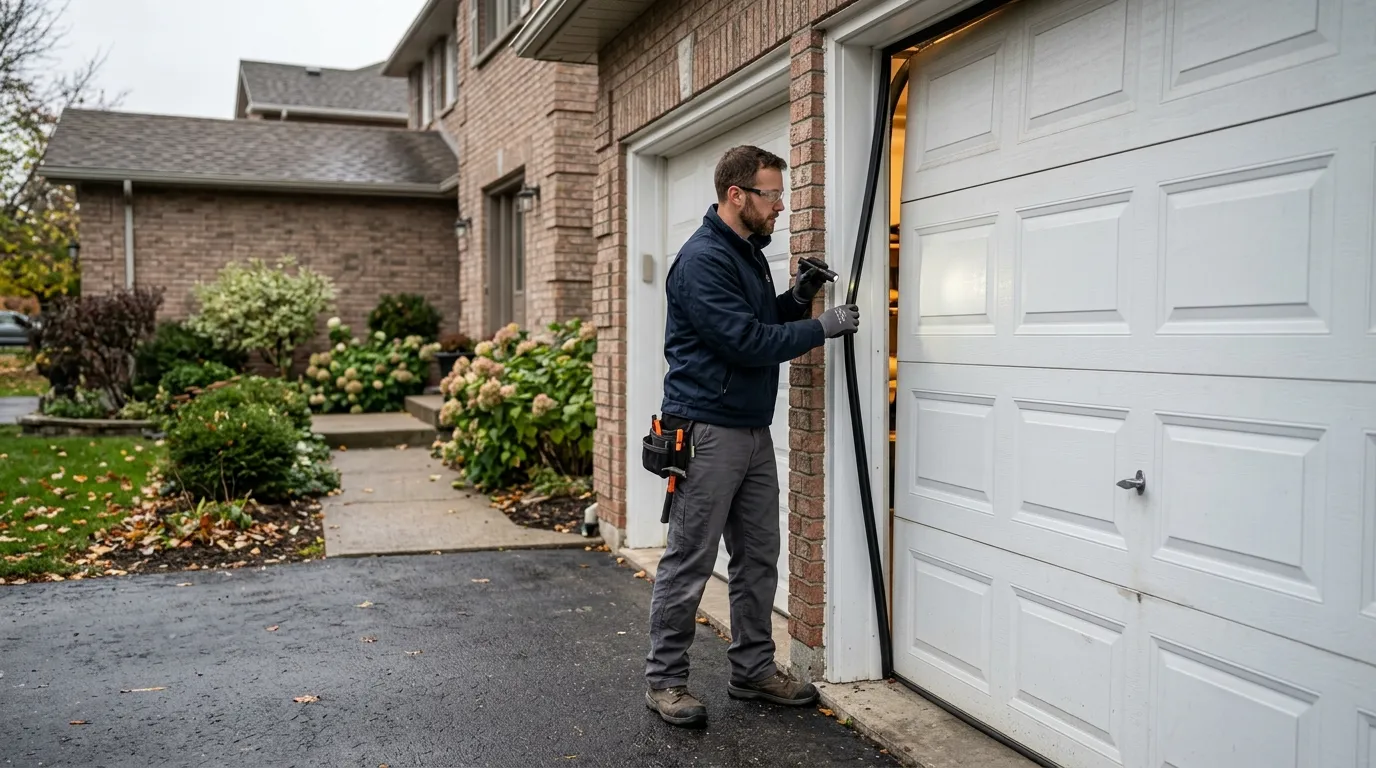
We're not going to put a number here that isn't grounded in your actual door, spring size, and what's failed, so we won't guess at a range. What we can tell you is what drives the cost on the calls we run in this area: spring size and type (older torsion setups often need springs sized differently than what's sold off the shelf today), whether the drums or cables need replacing alongside the spring, and whether the opener is original to a 1960s-70s install or already upgraded.
A repair on a door that's had one owner since the 1970s tends to need more parts at once than a door replaced in the last ten years, simply because everything ages together. We quote after we look at the door and the track, not over the phone from a description.
How It Shows Up
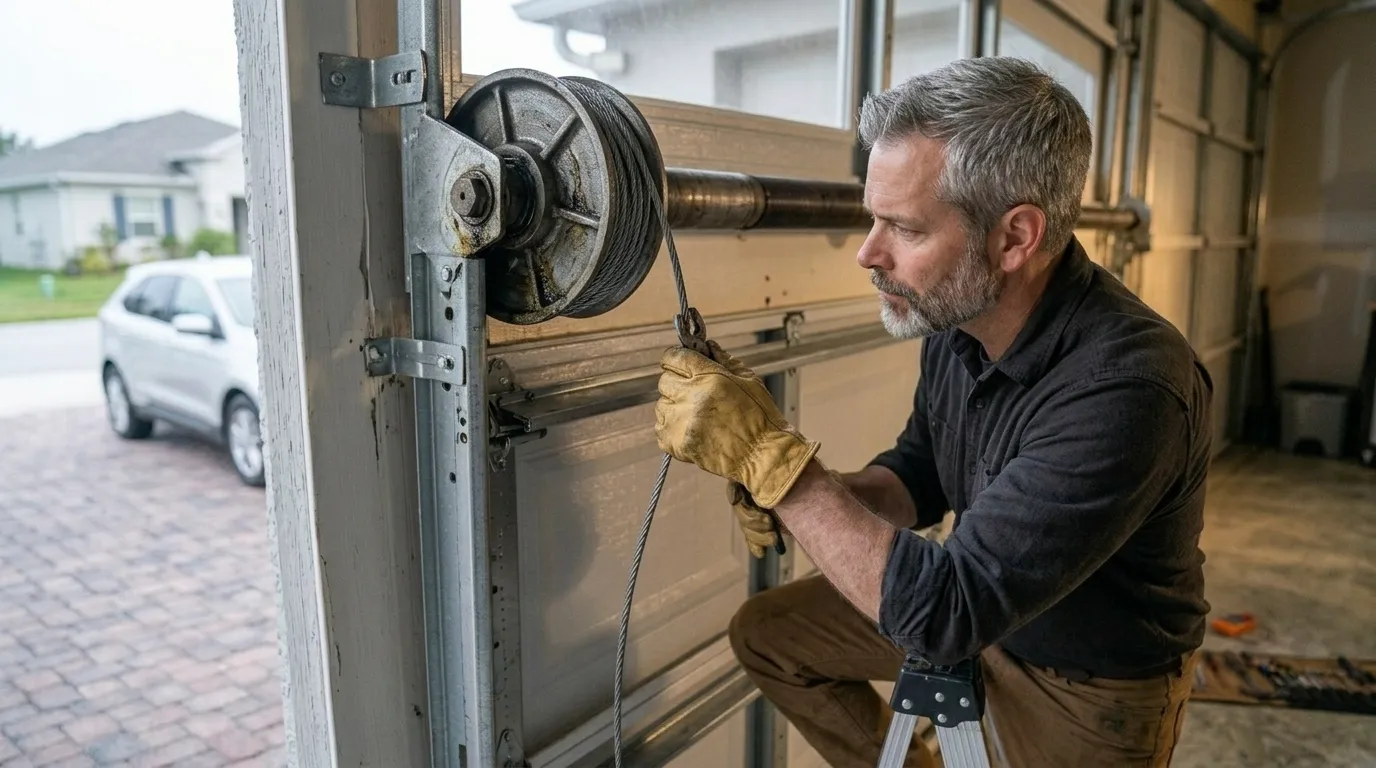
Milwaukee sits in a cold-severe climate band, and that shows up in specific ways on a garage door rather than general ones. Torsion springs lose tension faster in sustained cold, so a spring that was marginal in October snaps in January when the steel contracts and the cycle count catches up with it. Openers on older doors start straining on the first cold mornings of the season - you'll hear the motor labor, or the door reverses partway up, because the spring isn't doing its share of the lift anymore and the opener is carrying weight it wasn't built to carry alone.
Track and roller wear shows up as a door that binds on one side, more common on the steel rollers original to older installs than on the nylon rollers now standard. If your door has gone stiff, noisy, or uneven specifically since the weather turned, that's not a coincidence - it's the cold finding the weak point in hardware that's already decades into its service life.
Why It Happens Here
Milwaukee's housing stock skews older across most of the 38 named areas in the service area, with construction concentrated in the 1960s and 70s and a median build year around 1971. That means original torsion hardware, single-wall doors, and openers from an era before today's safety sensors and reinforced rail systems are still common on garages from Riverwest to Hales Corners. Pair that housing age with a cold-severe climate and you get a predictable failure pattern: steel components that were already at the end of their expected cycle life get pushed over the edge by winter contraction and the extra load on the opener motor.
It's a different problem than what you'd see in a market built mostly after 2000, where springs and openers are newer and rated for current cycle counts. Here, the fix often isn't just the failed part - it's recognizing that the rest of the hardware on a 50-plus-year-old door is close behind it.
Talk to a Technician Before You Book
Describe what the door is doing and get a straight answer on what it likely needs.
Other Ways We Can Help
Jobs Like Yours
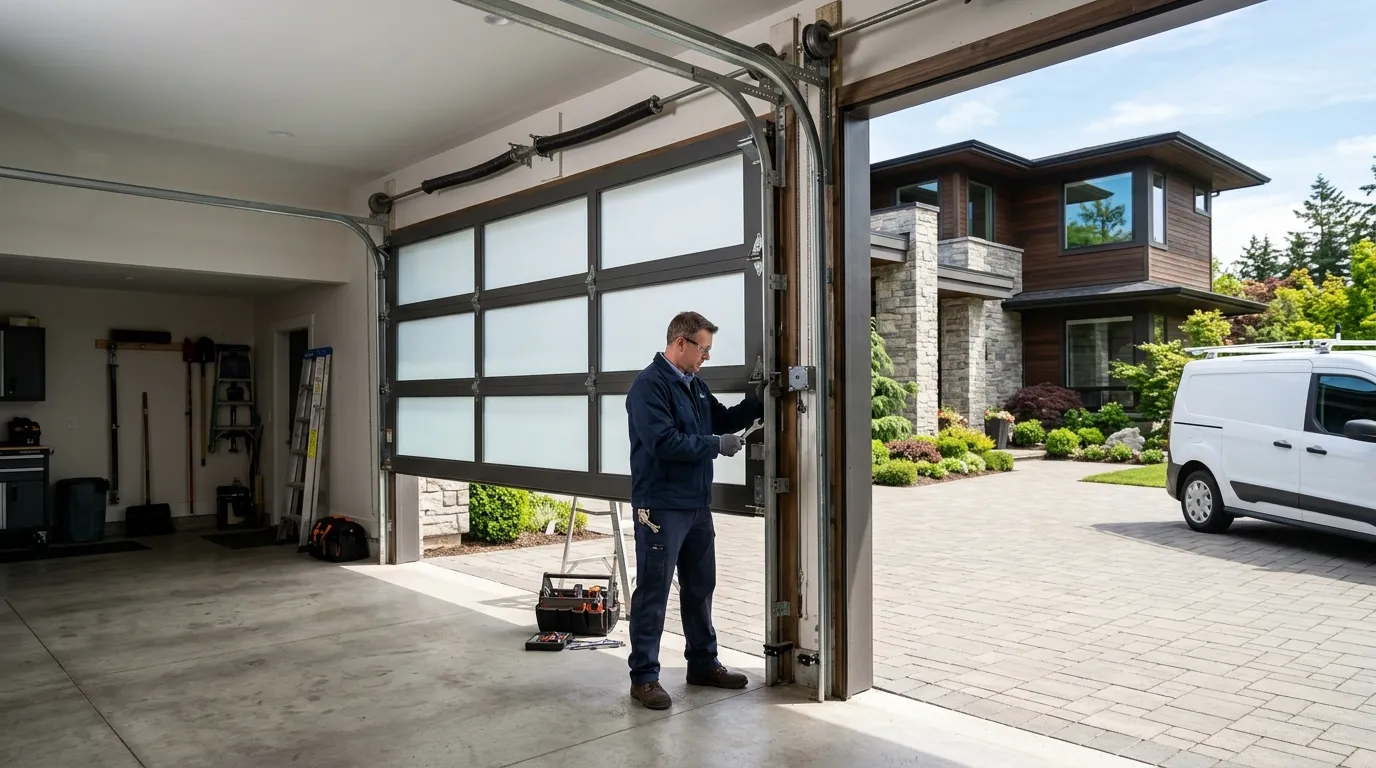
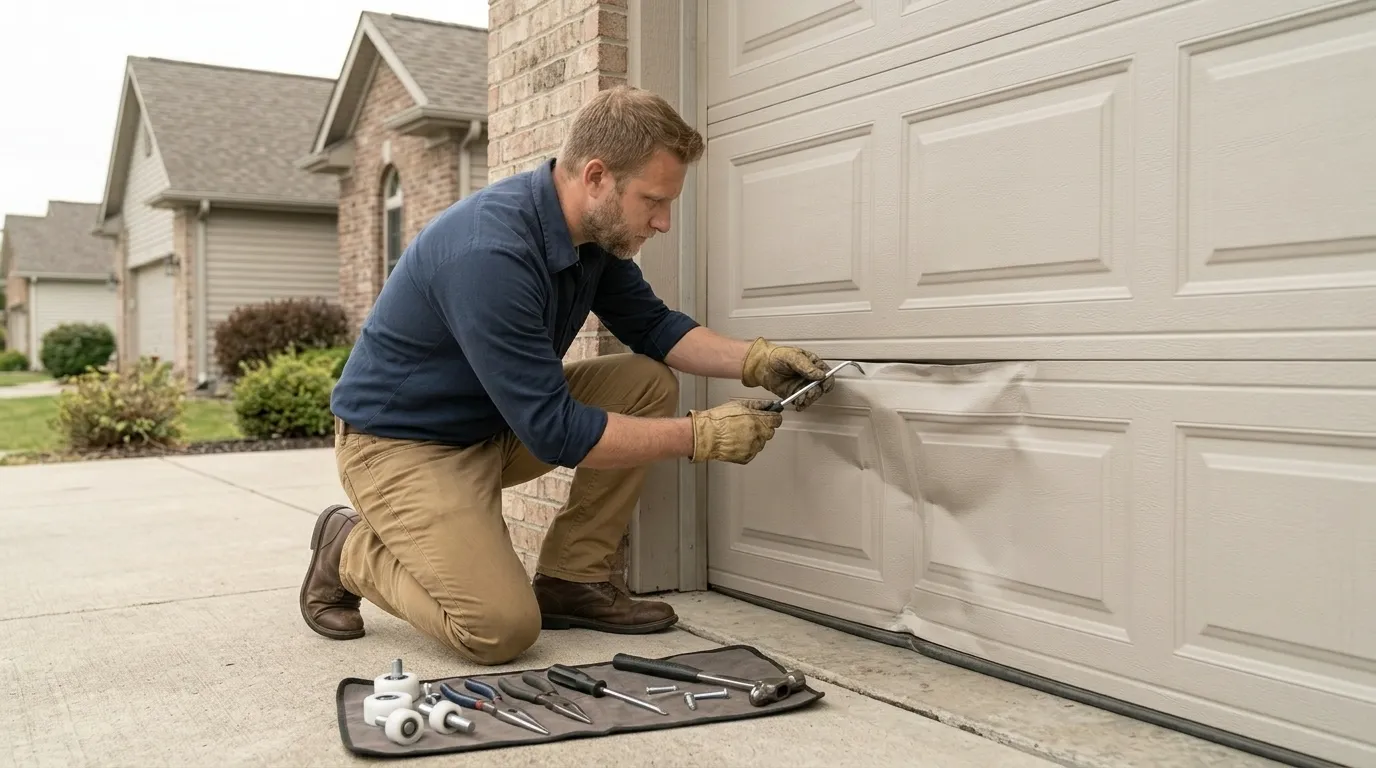
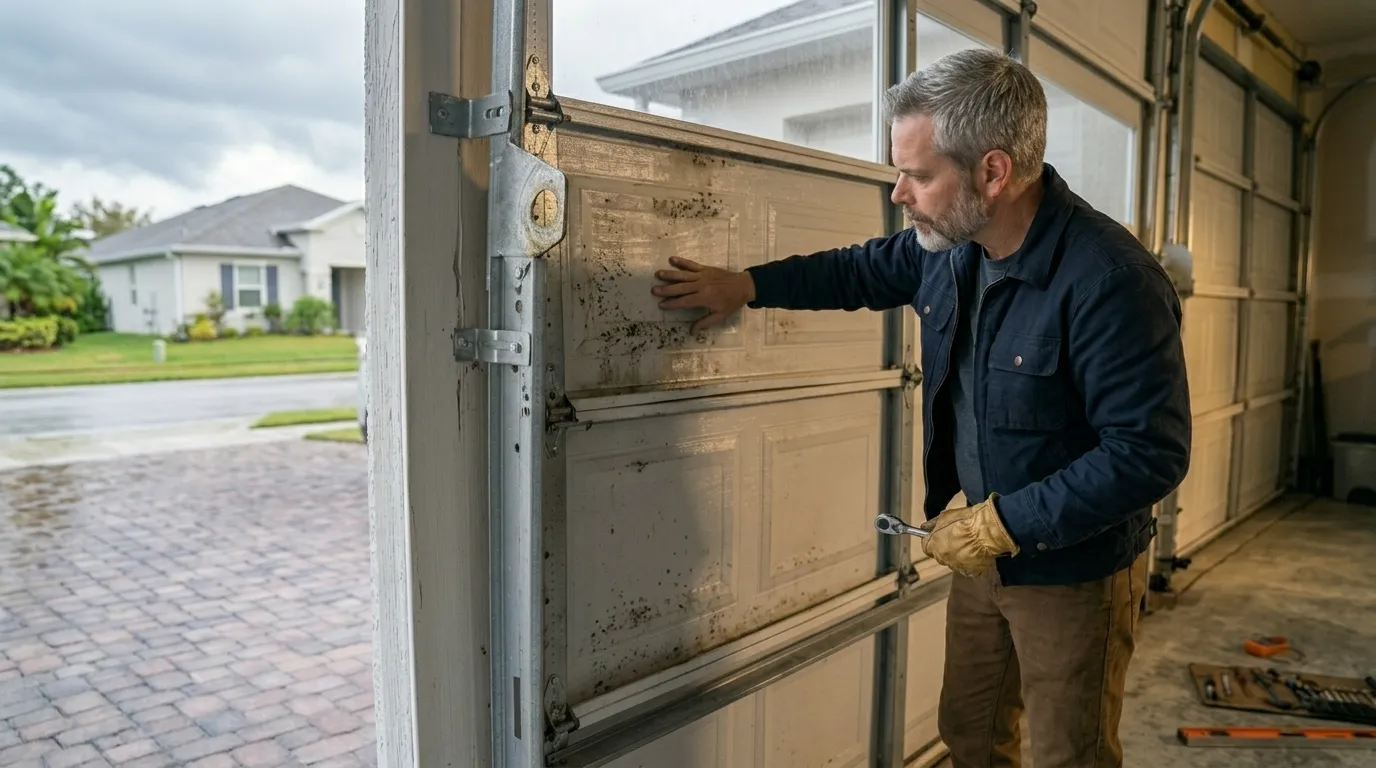
Recent work from this service line.
Why Milwaukee Calls Us
Frequently Asked Questions
Why did my garage door spring snap in the winter and not before?
Cold steel loses tension faster, and a torsion spring that's already near the end of its cycle life in Milwaukee's cold-severe climate is more likely to break in January than in August. If your house dates to the 1960s or 70s, the spring may be original and simply due.
Do you work on doors with original 1960s-70s hardware?
Yes. We stock torsion springs and drums sized for older installs, not just current off-the-shelf standard sizes, since a lot of Milwaukee's housing stock still has original track and spring hardware from that era.
Can you give me a price over the phone?
Not accurately. Spring size, drum and cable condition, and opener age all affect the job, and those vary a lot between an original 1960s setup and a newer install. We quote after we've looked at the actual door.
My opener strains and reverses the door on cold mornings - is that the opener or the spring?
Usually the spring. When a torsion spring loses tension in cold weather, the opener has to lift more of the door's weight itself, which is what causes the straining sound and partial reversals. Replacing the opener without addressing the spring usually doesn't fix it.
Need Garage Door Repair for Milwaukee's Older Housing Stock?
Call now for straight answers on cost and timing.