
Milwaukee, WI
Off-Track Repair in Glendale
Off-Track Garage Door Repair, Glendale, WI
Off-track garage door repair for Glendale, WI homes built near 1965. Milwaukee's crew drives 5 miles in to fix the bent track and off-track panels fast.
- Licensed & Insured
- Same-Area Service Calls
- Upfront Pricing
What Happens When You Call
-
1
Call or Request a Quote
Tell us what the door is doing and roughly how old the house is - that alone points us toward the likely part before a truck leaves.
-
2
On-Site Diagnosis
A tech checks the spring, cables, tracks, and opener in person and tells you plainly what is actually wrong.
-
3
Straight Price, No Surprises
You get a number before any work starts. It covers parts and labor, nothing added after the fact.
-
4
Fixed the Same Visit
Most repairs are done in one trip. If a part needs sourcing, we tell you that upfront instead of guessing.
How to Book
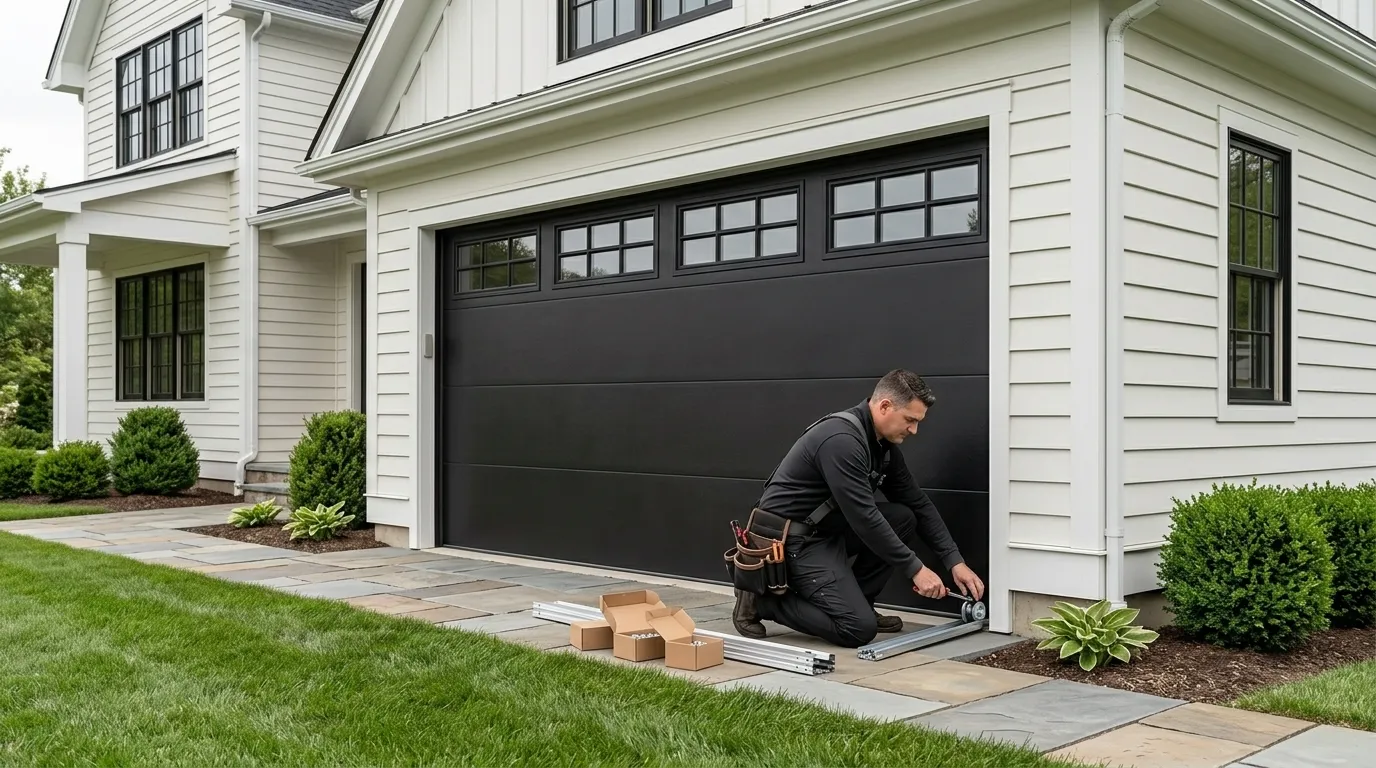
Glendale doesn't have its own garage door shop, so calls here get scheduled out of the Milwaukee crew and routed for the 5-mile drive in. That's not a knock on the town - it's just how the service area is set up, and it means booking works the same as anywhere else we cover: you tell us the door is off its track (or one side has dropped while the other stayed up), we ask a few questions about the noise and how the door is sitting, and we get a truck moving.
We don't quote a fixed arrival window on this page, because that depends on where the truck already is that day. What we can tell you is that an off-track door isn't a job to sit on - a door hanging on one cable with the other roller out of the channel can come down the rest of the way, and at that point you're looking at a bent panel or a cracked jamb bracket instead of a track fix.
If you're not sure whether what you're looking at is an off-track fault or something else - a broken spring looks similar from across the garage - say what you see and let us sort it on the phone before you touch anything.
More on the wider area we drive from: Milwaukee Garage Door Pros near Glendale.
How It Shows Up
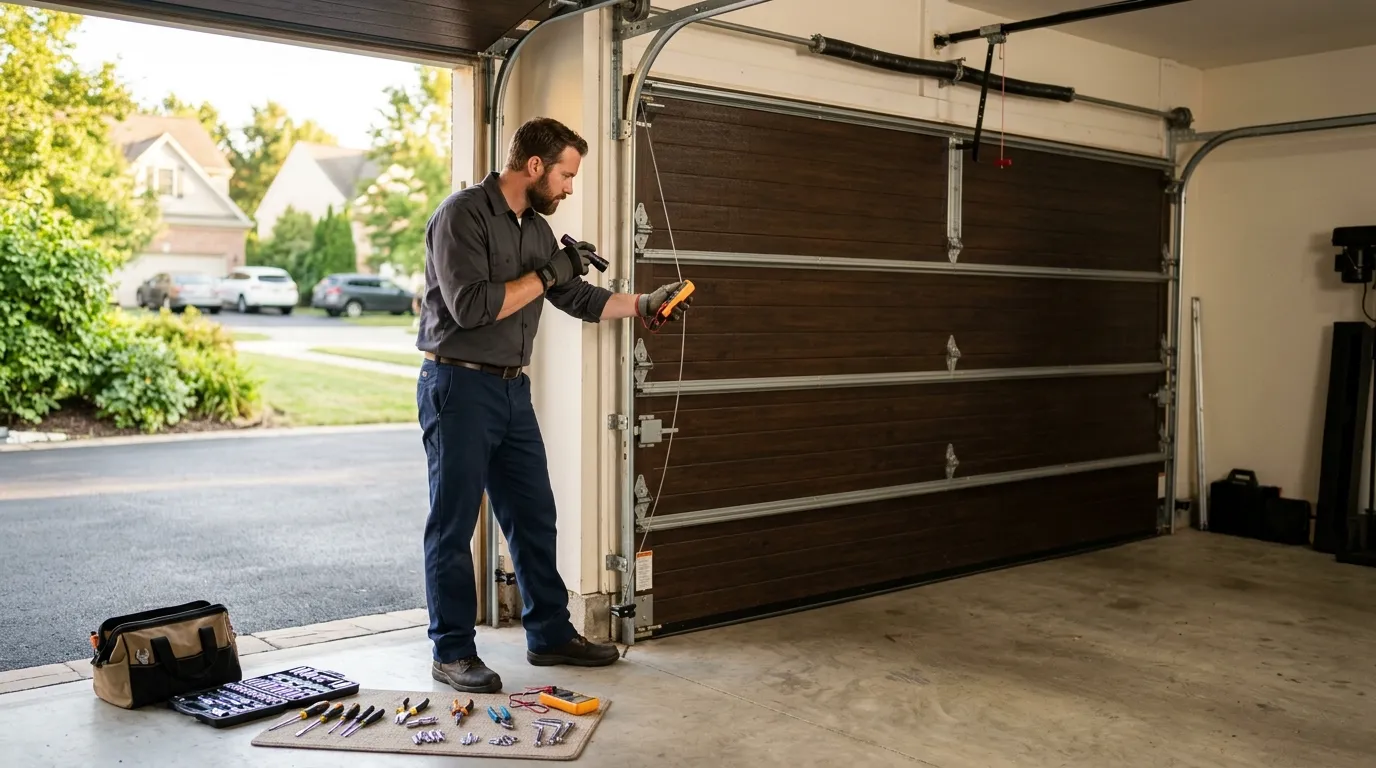
A lot of the housing on this side of the Milwaukee area - Glendale included - went up around 1965, a few years ahead of the 1971 median for the broader service area we work in. That matters for off-track calls specifically, because doors from that build era tend to run on narrower two-inch track with steel roller brackets fastened straight to wood jambs, and a lot of them are still on extension springs rather than torsion bar.
On that hardware, the off-track fault usually starts small: a roller bracket screw backs out of the jamb over the years, the track flexes a quarter inch under load, and the roller starts riding the edge of the rail instead of the middle. You'll hear it before you see it - a scraping or grinding on the way up, worse on one side than the other. Left alone, that roller eventually jumps the rail entirely, and the door comes down crooked or won't move at all.
Cold makes this worse. An extension spring that's already fatigued gets brittle in a hard winter and can let go right at the hanger, which yanks the door sideways off the track in one motion instead of the slow drift most owners are used to seeing.
Parts We Carry
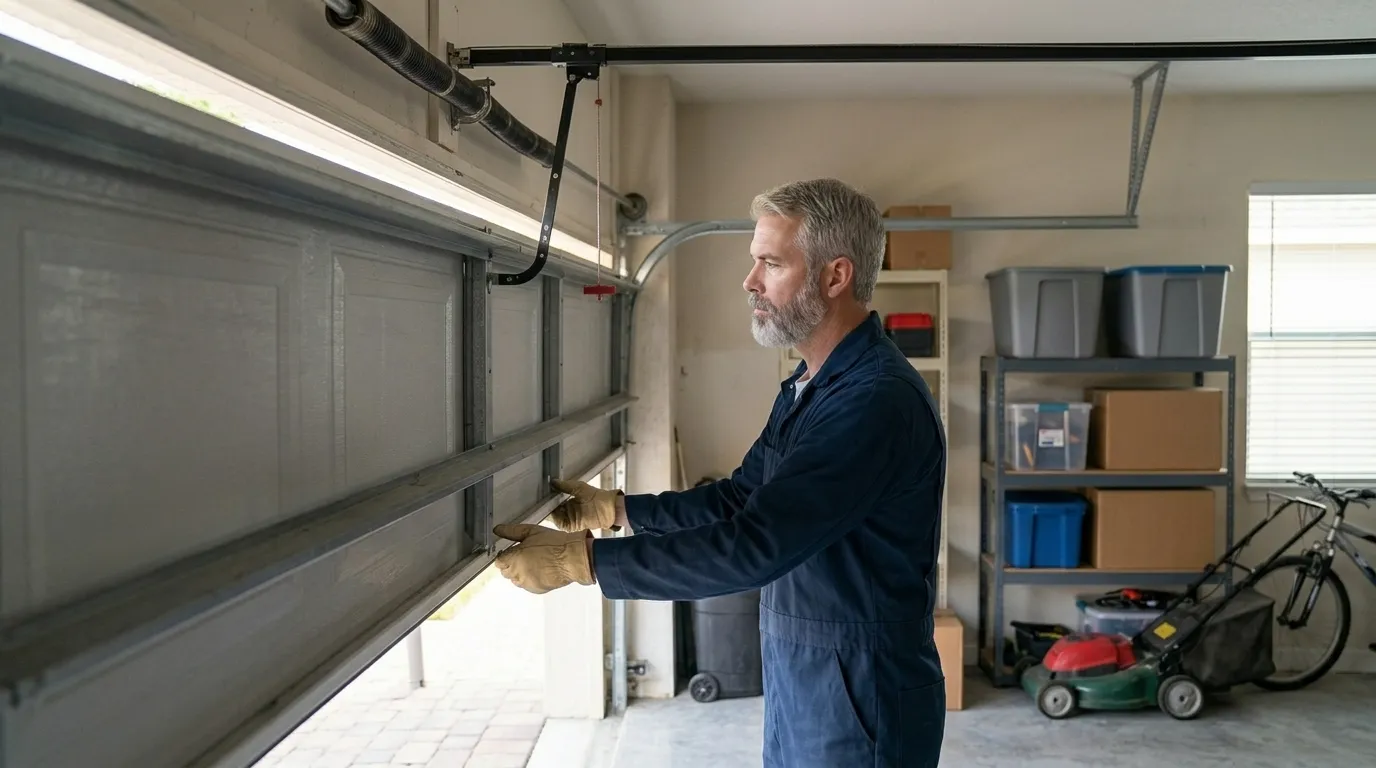
For track and roller work on a door from the mid-1960s era common in Glendale, we carry standard two-inch galvanized track sections, jamb brackets, and nylon and steel rollers sized for that older rail width - the parts that fail most often on this vintage of door.
Here's the honest limitation: some of the original jamb hardware from that period was a nonstandard gauge that isn't made anymore. If your bracket is one of those, we can usually fabricate a fix on site with a compatible plate, but a full match to the original part sometimes means a short order-in wait rather than a same-visit swap. We'll tell you on site which situation you're in before we start, not after.
We also stock extension spring sets in the common lengths for these older single and double doors, since a snapped extension spring is what pulls a lot of these doors off track in the first place. If your opener has been fighting a door that's binding on bent track, we won't just clear the roller and send you on your way - we'll check whether the track itself needs straightening or replacing, because a re-seated roller on bent rail comes off again within weeks.
Doing It Yourself
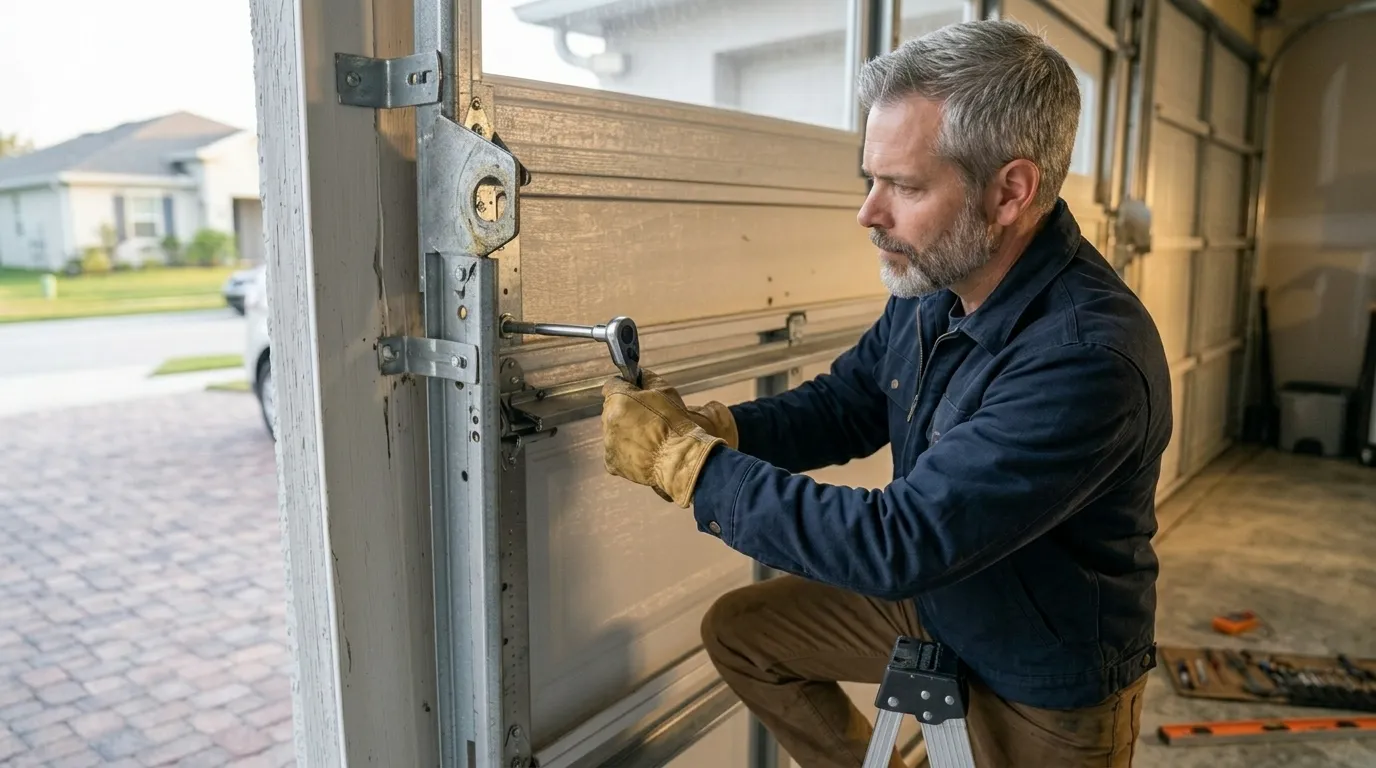
You can check a few things before calling. With the door down and the opener disconnected, look at the track on both sides from the floor up - a factory-straight rail runs in a clean vertical line, and a kink or a spot where the rail pinches narrower than the rest is the failure point. You can also check the lag screws holding the jamb brackets to the frame; if they're loose or the wood around them is split, that's your off-track cause right there.
What you shouldn't do is try to force a dropped roller back onto the rail with the door under spring tension, or cut the cable to free a stuck panel. On a door built in this era, the extension springs carry real force, and a cable under load can whip if it lets go. If the door is sitting crooked, off the track on one side, or won't budge at all, that's a call, not a DIY job - the risk isn't worth what you'd save doing it yourself.
Time on the Job
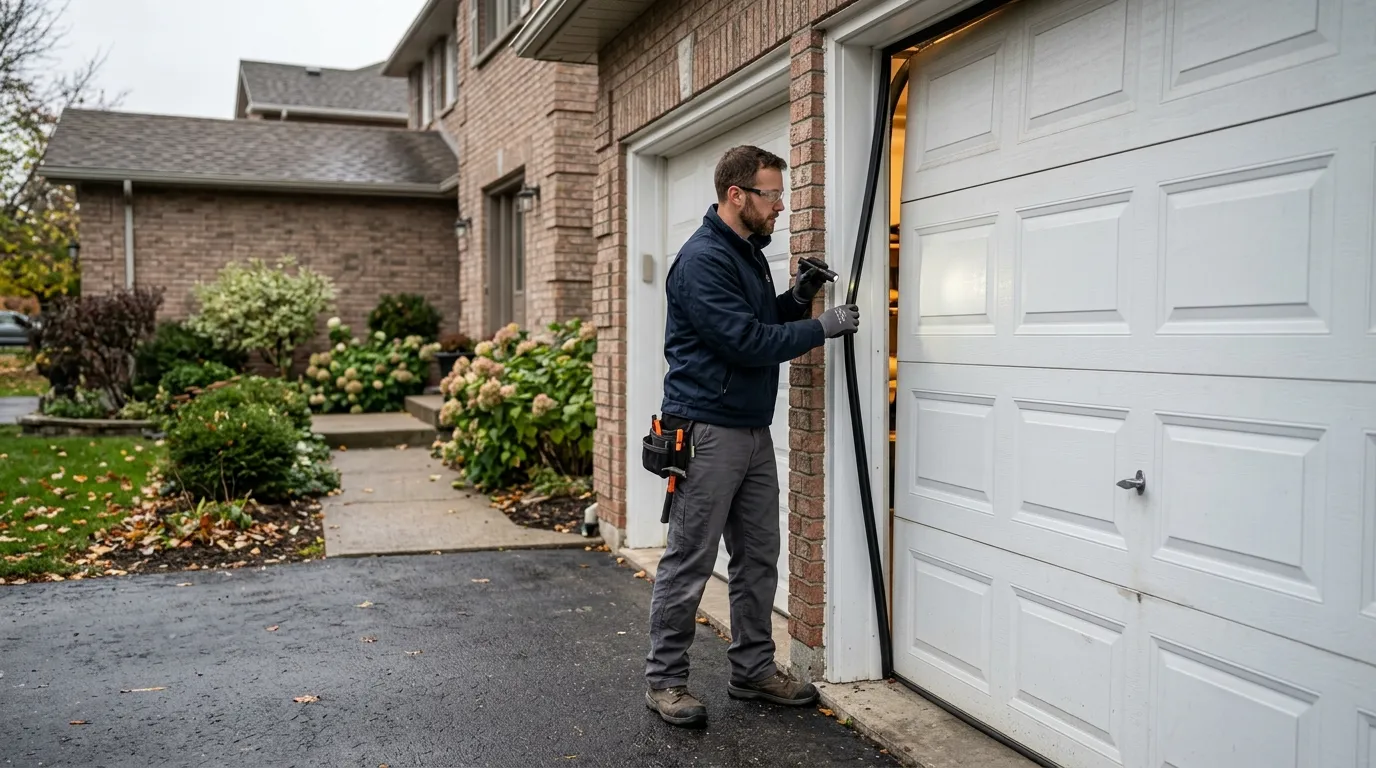
Most off-track calls on a two-inch track door like the ones common in Glendale run to a straightened or replaced track section, new rollers, and a bracket reset - that's a few hours of work once the truck is on site, longer if the track needs full replacement on both sides or the jamb wood needs shoring up.
The drive itself adds time you won't see on the invoice: it's about 5 miles in from the Milwaukee shop, so figure that into when you call versus when a truck actually shows up, especially later in the day. We don't promise a same-day window on this page because it depends on what's already on the schedule, but an off-track door with a cable still holding is a fix we treat as urgent, not a fix we let sit for a week.
If the track and brackets are original to a 1965-era build and heavily rusted or bent in more than one spot, straightening stops making sense and full track replacement is the better use of the visit - we'll say so on site rather than patch something that'll be back off the rail by spring.
Talk to a Glendale Technician First
Describe what the door is doing and get a straight answer on what it likely needs.
Other Garage Door Services in Glendale
Recent Work in Glendale
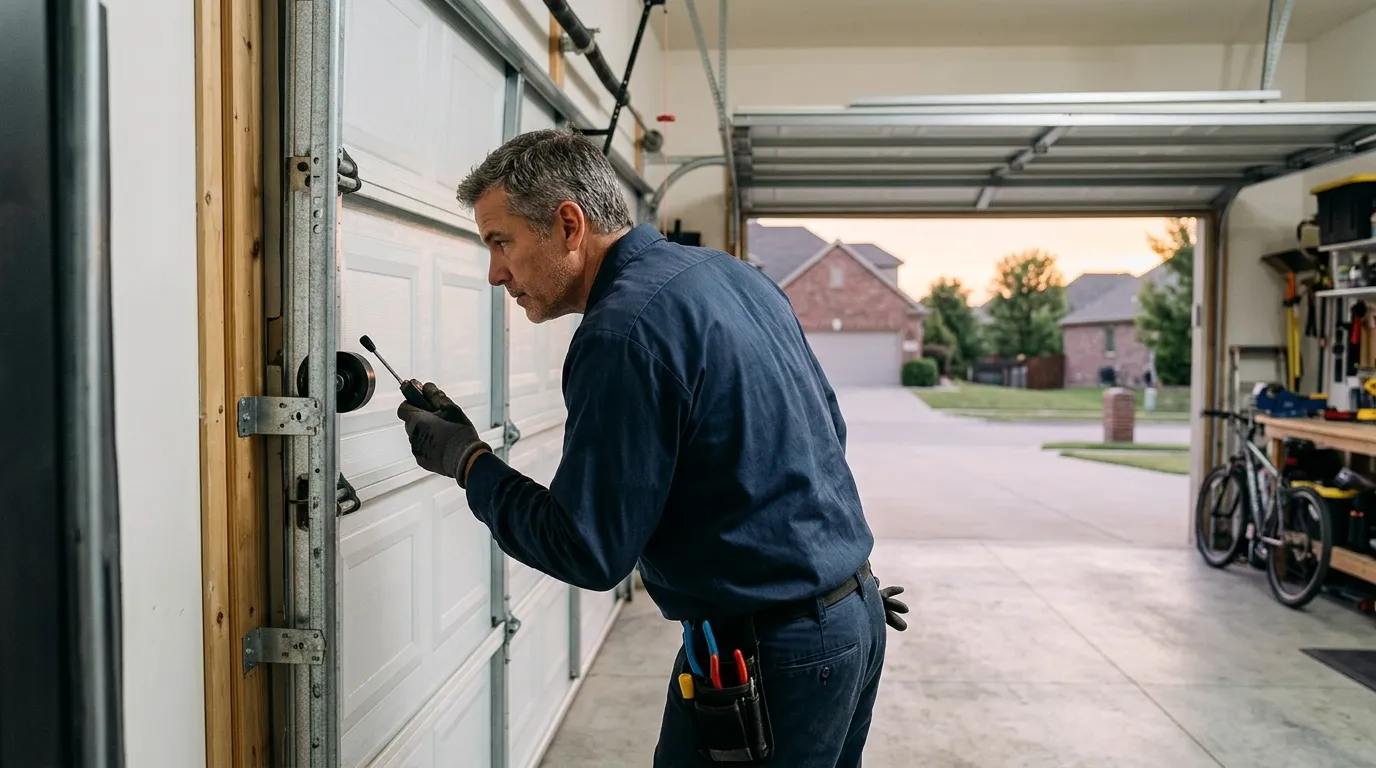
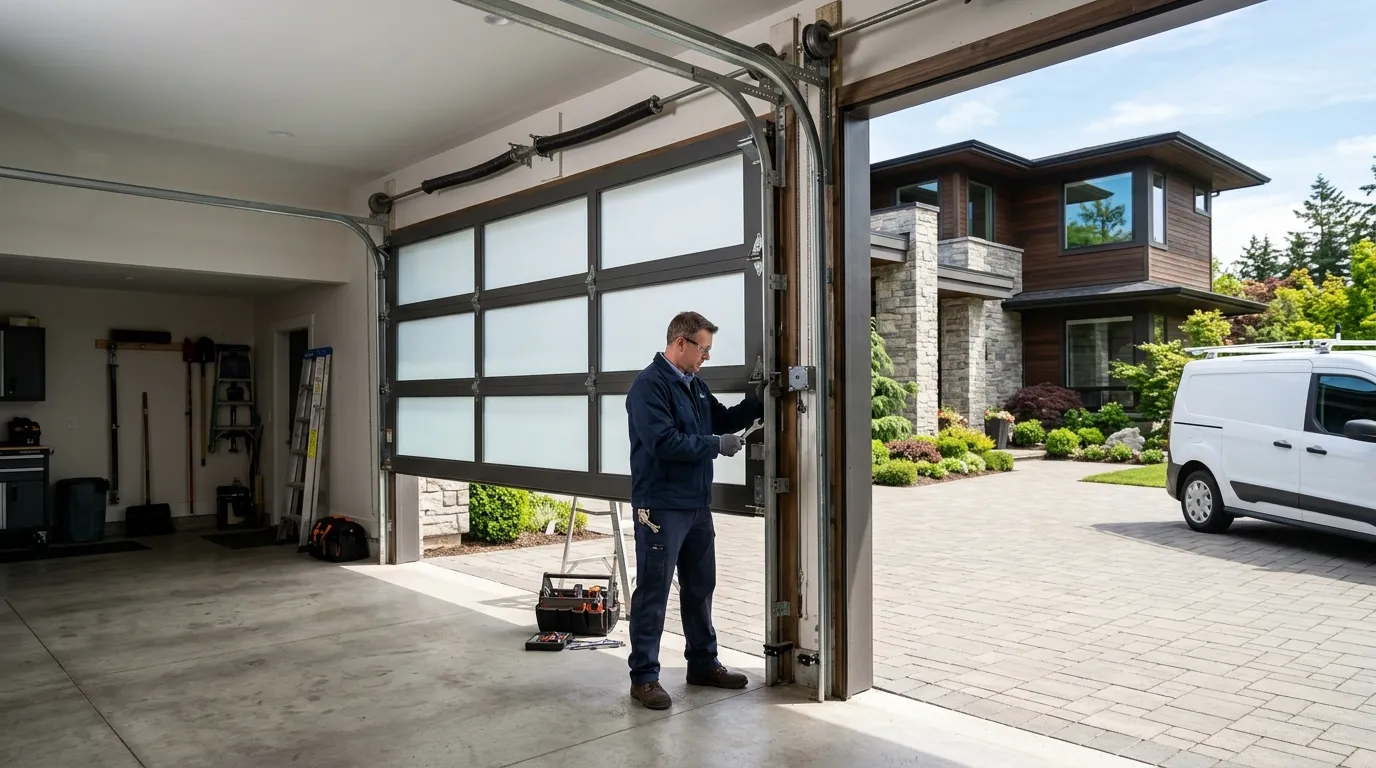
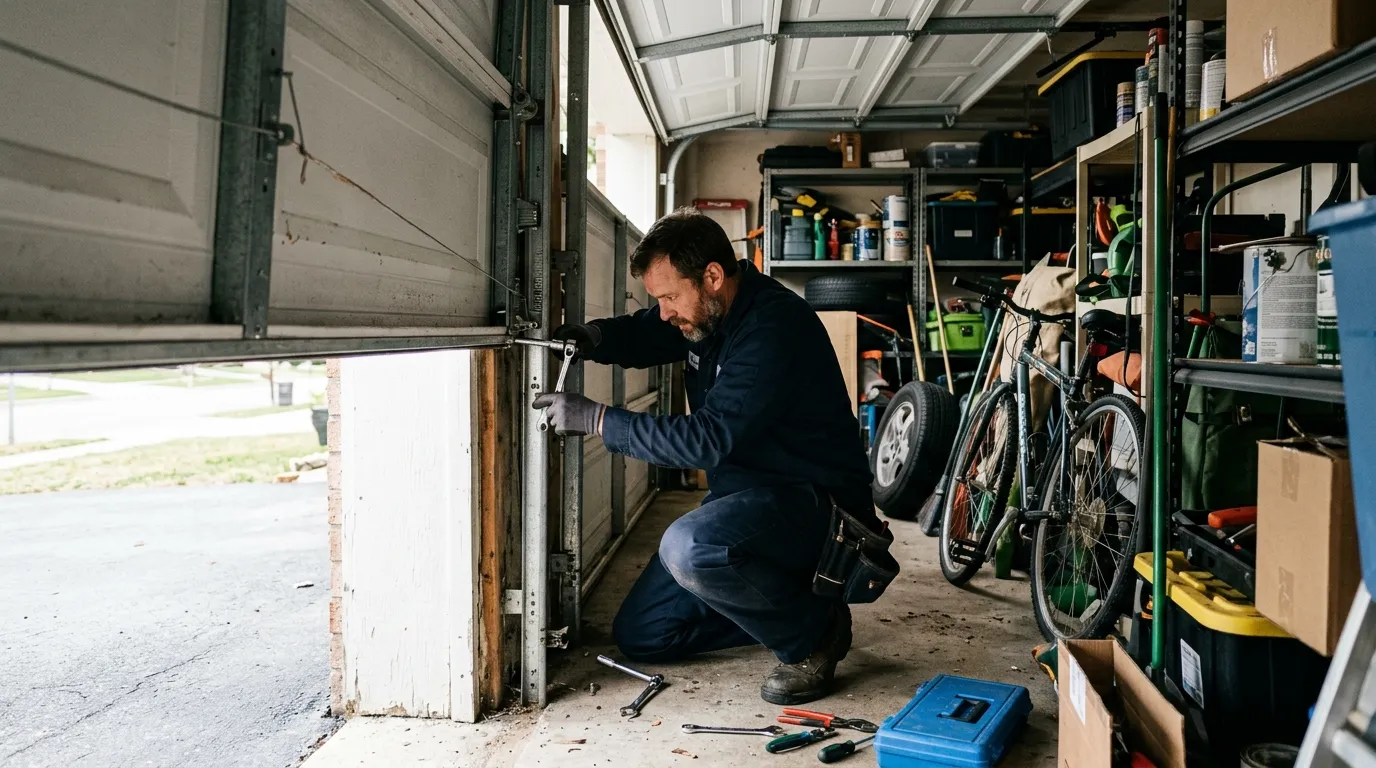
A look at jobs our crew has been on nearby.
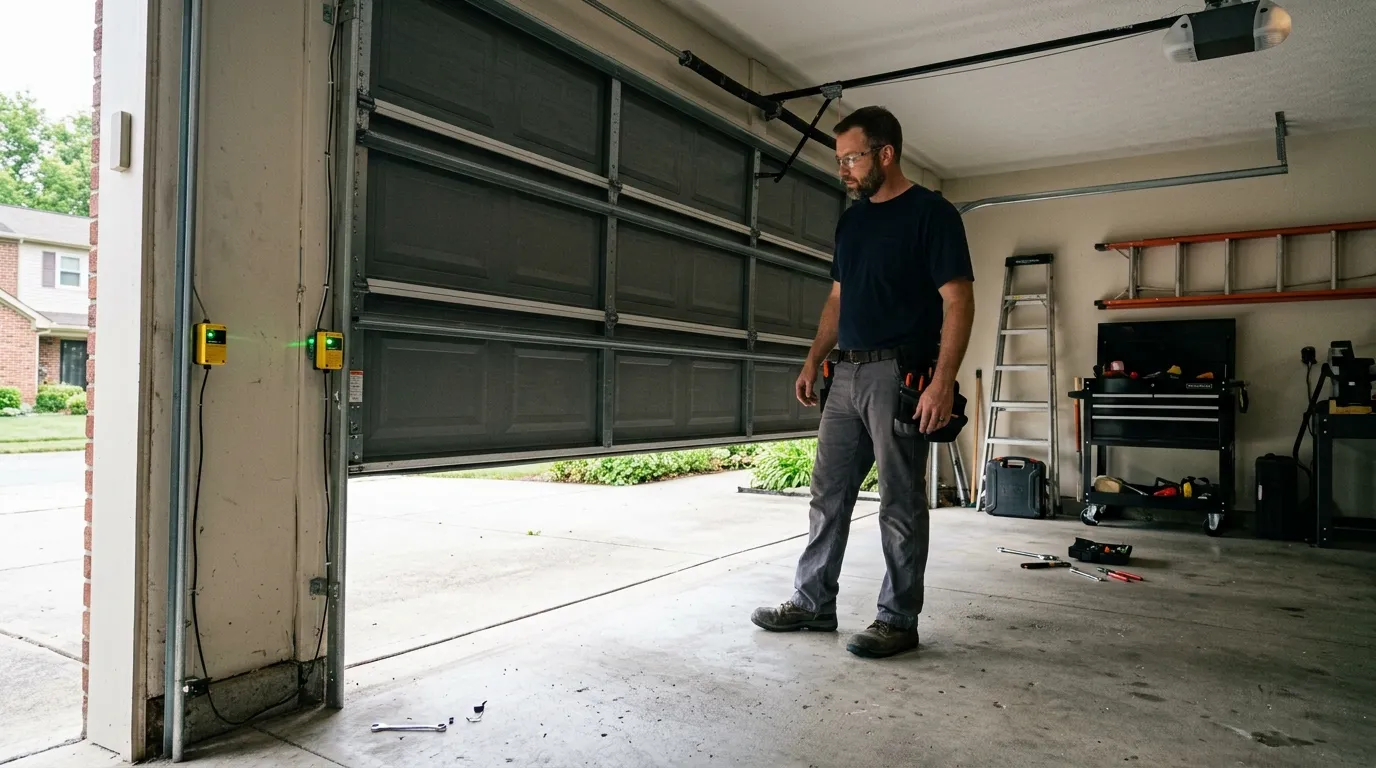
Why Glendale Calls Us
Frequently Asked Questions
Why is my garage door off the track on one side but not the other?
That's usually a roller bracket that's worked loose from the jamb on one side, or a spring on that side that's lost tension and let the door hang unevenly. Once one side droops, the roller on that track edge takes more load than it's built for and jumps the rail. It's a track and hardware fix, not something to force back into place by hand.
Is a door built around 1965 harder to fix than a newer one?
Not harder, just different. These doors usually run on narrower two-inch track with jamb-mounted brackets and extension springs rather than torsion bar. The parts are still made in standard sizes, though a few of the original nonstandard fittings sometimes need a short order-in wait instead of a same-visit swap.
Do you have a shop in Glendale?
No. Glendale is covered from the Milwaukee shop, about 5 miles out, so scheduling and dispatch both run through Milwaukee rather than a local branch.
Can cold weather really knock a door off track?
Yes. This whole area sits in a cold-climate band, and an extension spring that's already fatigued gets brittle in hard cold. When it lets go, it can pull the door sideways off the rail in one motion instead of the slow drift you'd see from a loose bracket.
Need Off-Track Repair in Glendale?
Call now for straight answers on cost and timing.