
Milwaukee, WI
Garage Door Service in Glendale
Garage Door Repair in Glendale, WI
Glendale homes mostly went up around 1965, which means overhead extension springs and older track hardware. We drive the 5 miles from Milwaukee to fix what that era left behind.
- Licensed & Insured
- Same-Area Service Calls
- Upfront Pricing
What Happens When You Call
-
1
Call or Request a Quote
Tell us what the door is doing and roughly how old the house is - that alone points us toward the likely part before a truck leaves.
-
2
On-Site Diagnosis
A tech checks the spring, cables, tracks, and opener in person and tells you plainly what is actually wrong.
-
3
Straight Price, No Surprises
You get a number before any work starts. It covers parts and labor, nothing added after the fact.
-
4
Fixed the Same Visit
Most repairs are done in one trip. If a part needs sourcing, we tell you that upfront instead of guessing.
How to Book
We don't keep a branch in Glendale - we run the job from Milwaukee, about 5 miles down the road. That's close enough that a call in the morning usually gets a truck out the same day, without the job carrying extra drive-time cost the way it would farther out in the service area. When you call, tell us the age of the house if you know it.
A door installed when the place was built in the mid-1960s is a different job than a door that got swapped out in the 1990s, and knowing which one we're walking into saves a second trip for parts. We book by phone, we ask what's broken and what year the house went up, and we tell you honestly whether it sounds like a spring, an opener, or a track problem before we ever load the truck.
We're not going to pretend we're based here. We're not.
What we can promise is that the 5-mile run from Milwaukee doesn't turn into an excuse - it's a short drive, and it's factored into how we schedule the day. See our Milwaukee garage door service page for what we cover across the wider area, and our Glendale page for the towns nearby we also reach.
How It Shows Up
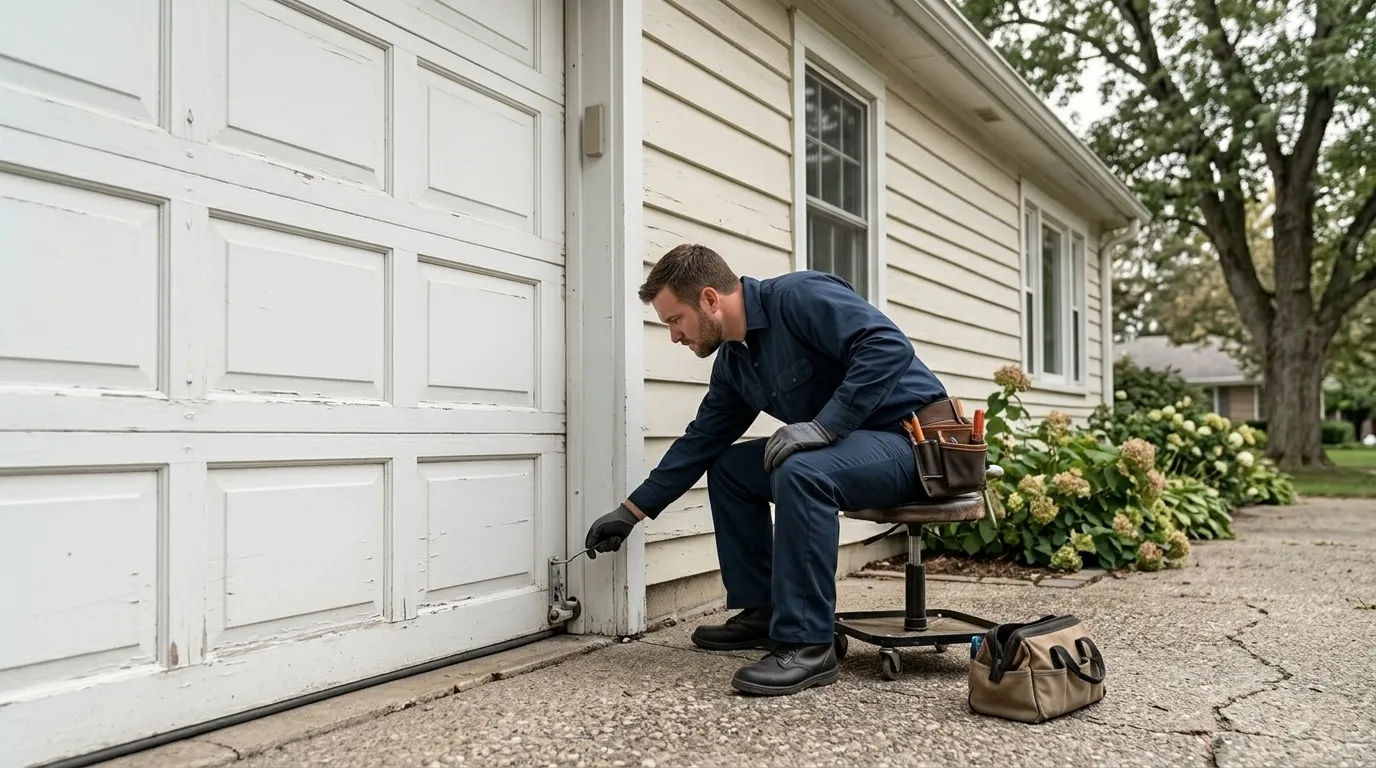
Glendale's housing stock centers on 1965, which puts it toward the older end of the 1938-2000 range we see across the wider Milwaukee area. Doors going up in a house built in 1965 almost always came with overhead extension springs, not torsion bars - torsion setups didn't become the standard until later.
That one detail changes almost everything about how a door here fails. Extension springs stretch and fatigue differently than torsion springs; they're more likely to snap a cable at the pulley instead of just losing lift evenly, and the failure tends to be sudden rather than gradual.
Milwaukee's winters are severe by any measure, and that matters more on a door with original-era hardware. Steel that's cycled through nearly sixty winters of freeze and thaw gets brittle at the hinges and rollers long before the panels themselves give out.
We see a lot of doors in this part of the service area where the track has bowed slightly from decades of ice buildup at the bottom section, and the opener - almost never original to the house - is fighting hardware it wasn't designed for. That mismatch between an old door and a newer opener is one of the most common calls we get from homes of this era.
Parts We Carry
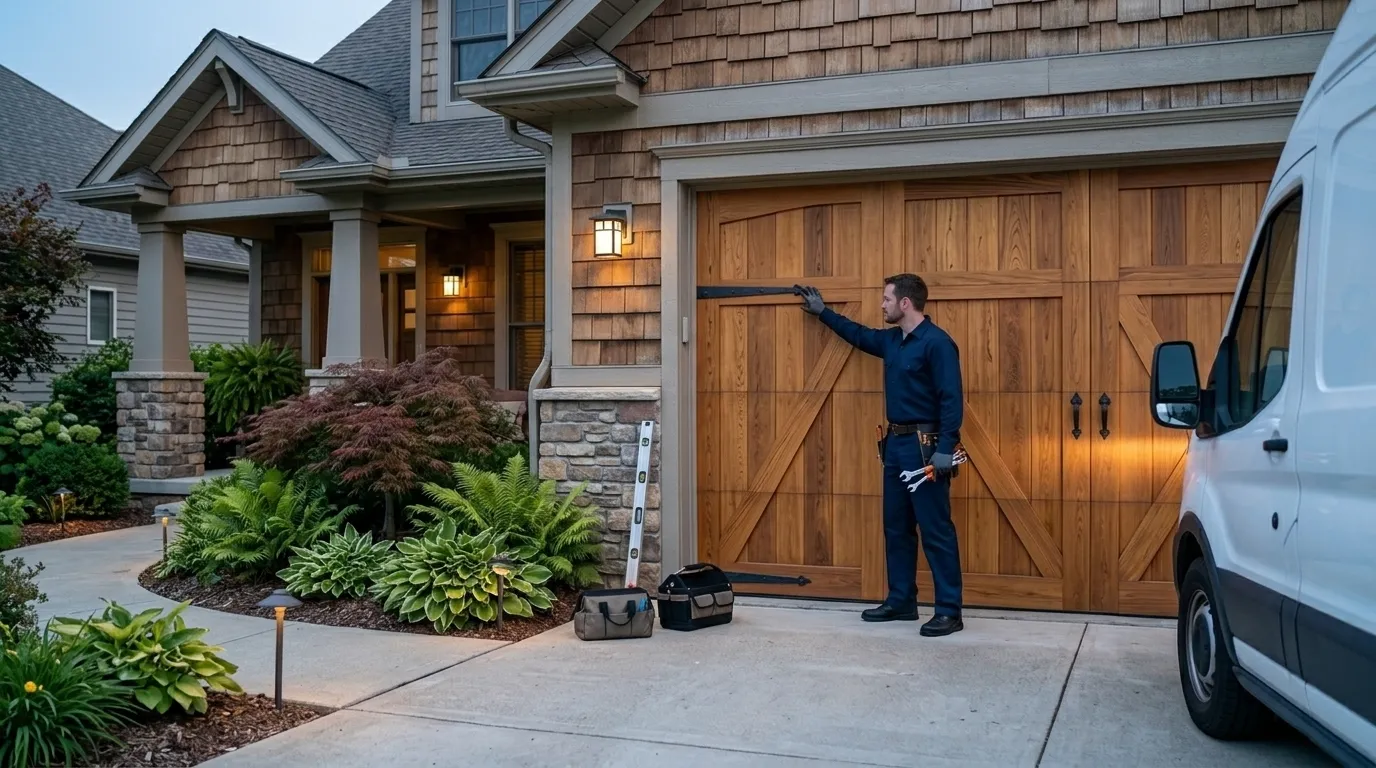
For houses built around Glendale's 1965 median, the parts that fail most are extension springs, the pulleys and cables that ride with them, and rollers on tracks that were never upgraded to nylon. We stock standard extension spring sets and the hardware that goes with them, plus the rollers and cable most commonly matched to doors from that build era. If your opener predates the mid-1990s photo-eye requirement, we carry replacements that meet current standards without you needing to explain the wiring to us.
Here's the honest limit: original wood-panel doors from the 1960s, if the house still has one, are not something we can always match section-for-section. Manufacturers don't run that same panel profile any more, and if only one section is damaged, we may not be able to source an exact replacement panel - full door replacement sometimes ends up cheaper and faster than waiting on a special order. We'll tell you straight if that's where your job is headed rather than quoting a repair that turns into a six-week wait.
Doing It Yourself
There's real stuff you can do yourself on a door this age. Lubricating rollers and hinges twice a year cuts down on the noise and slows wear on hardware that's already decades old.
Checking that the track bolts haven't worked loose - common on houses from the 1960s where the framing has settled a bit - takes five minutes with a wrench. Wiping down the bottom seal and checking it for cracking before winter is worth doing yourself too, since a gapped seal lets cold air and road salt spray straight into the garage.
What you shouldn't touch: the springs. An extension spring under tension can put someone in the hospital, and on a door this old, the mounting brackets are often as tired as the spring itself.
If a cable's frayed or a spring's already sagging, that's a call, not a project. We'd rather talk you out of a bad DIY attempt than come out later for something worse.
Time on the Job
A straight extension spring replacement on a door from Glendale's era is usually the shorter job, since the hardware is simple and we're not fighting a torsion drum. Where the time goes is when the track has bowed or the rollers have chewed up the channel from years of freeze-thaw cycling - that means realigning or replacing sections of track, not just swapping a spring, and it takes longer. Opener swaps run longer too if the house never had the wiring updated for a modern unit.
We don't quote a fixed number of hours over the phone, because the difference between a clean spring job and a track rebuild isn't obvious until we're standing in front of the door. What we can say is that houses in this part of the service area, going up mostly in the 1960s, tend to need the more involved version of the job more often than newer construction does - the hardware has simply had more time to wear.
Talk to a Glendale Technician First
Describe what the door is doing and get a straight answer on what it likely needs.
Other Garage Door Services in Glendale
Recent Work in Glendale
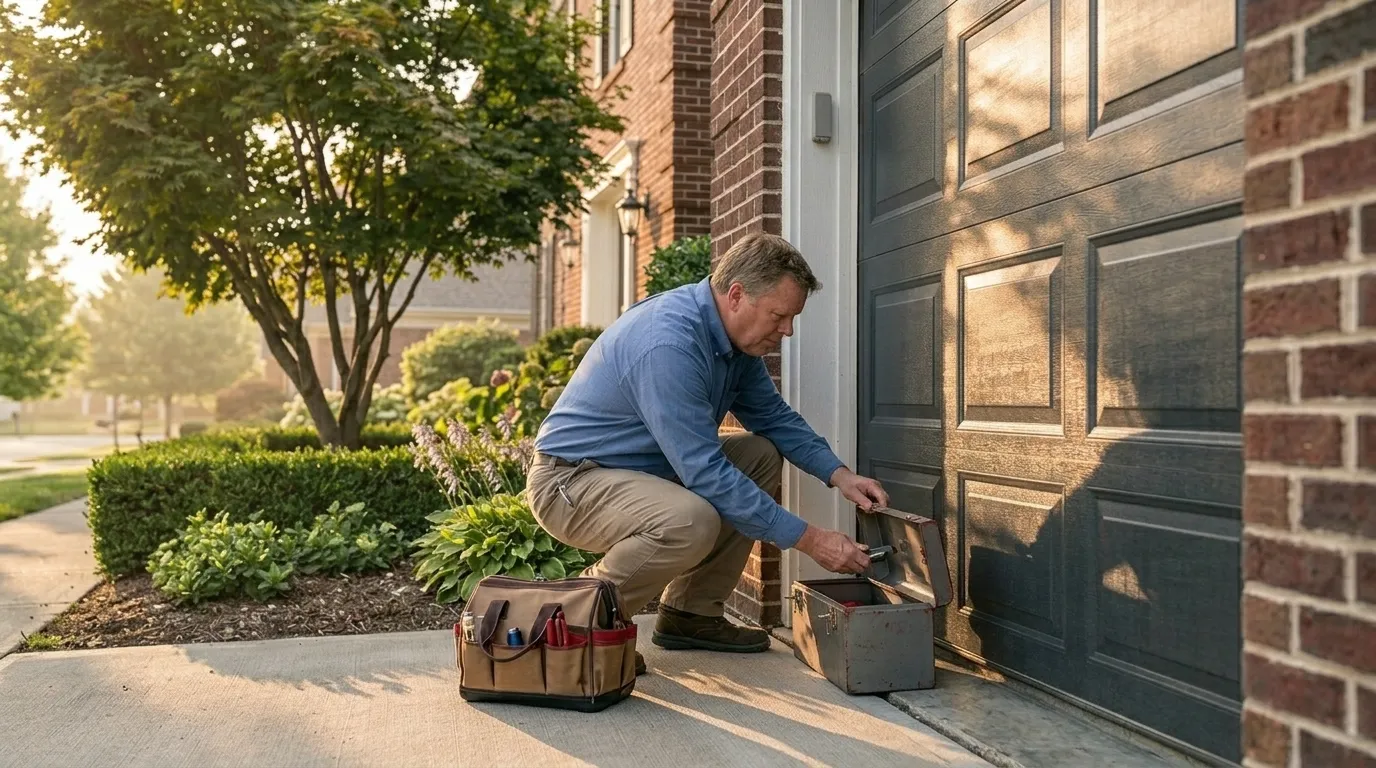
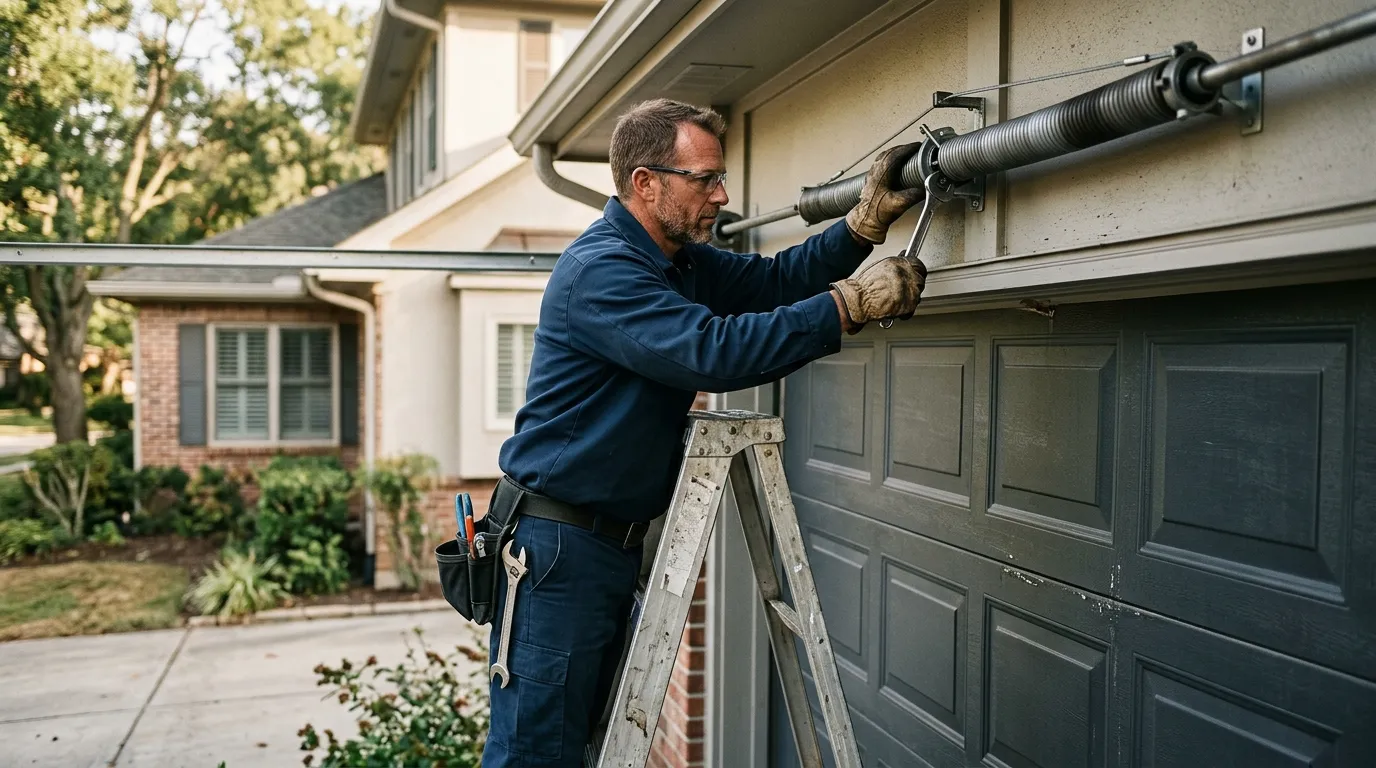
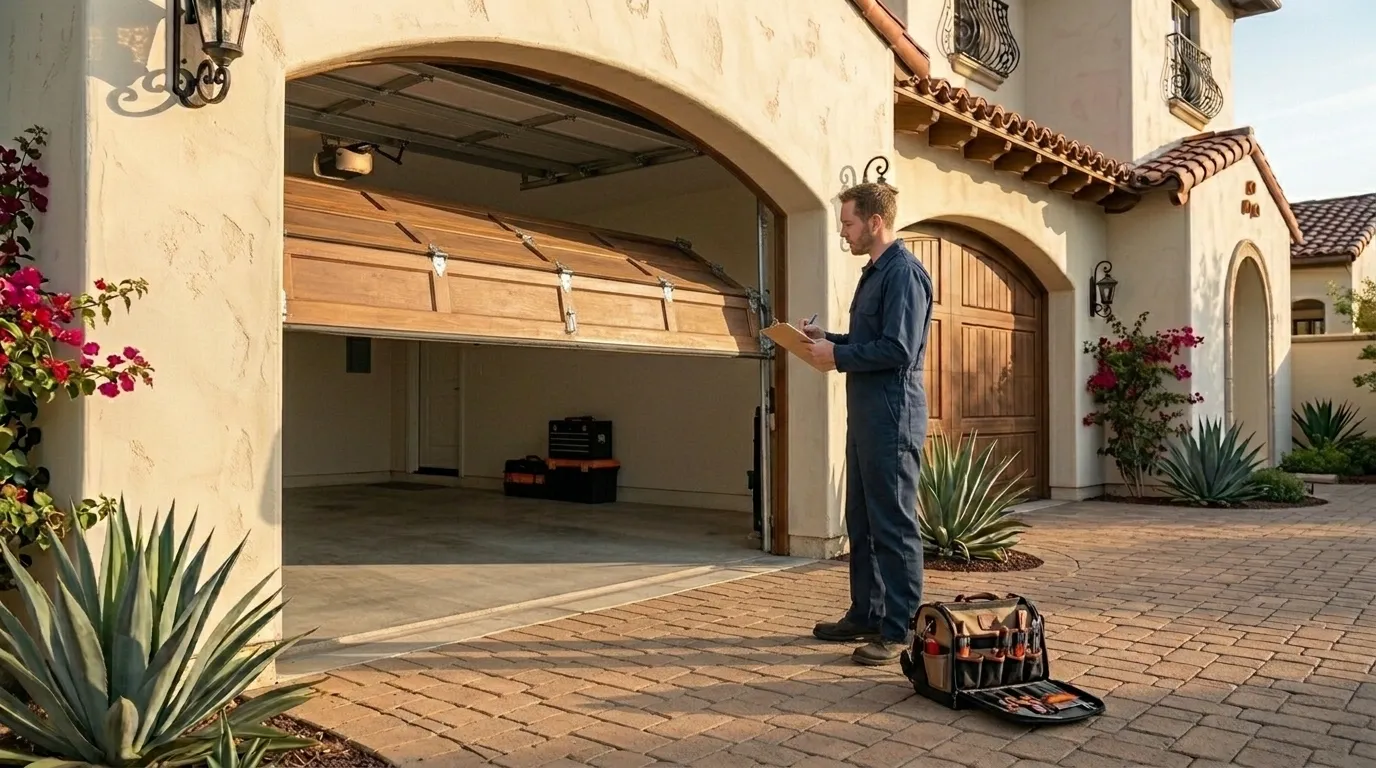
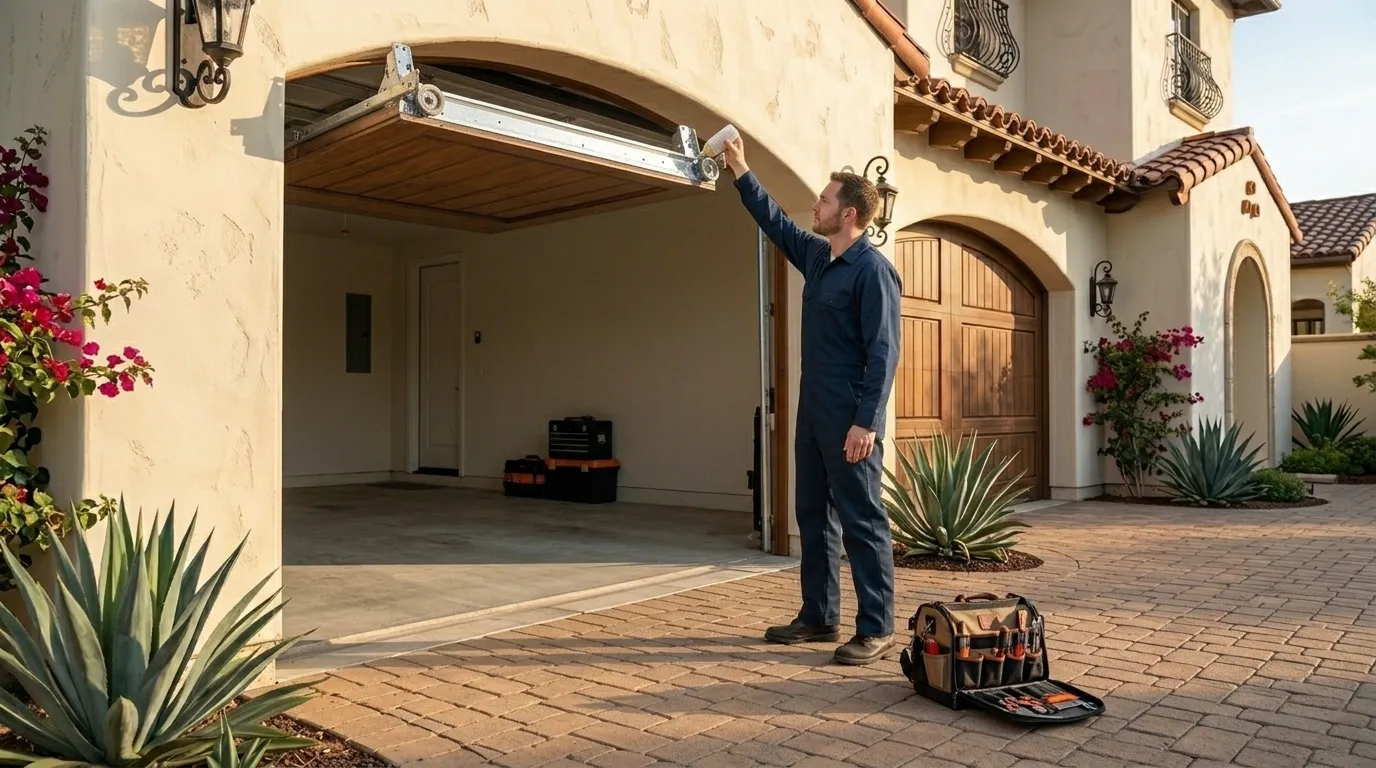
A look at jobs our crew has been on nearby.
Why Glendale Calls Us
Frequently Asked Questions
Why does my garage door in Glendale still have old-style springs instead of torsion springs?
Most houses in Glendale went up around 1965, and overhead extension springs were the standard hardware at that time - torsion springs didn't become common until later. If your house hasn't had a full door replacement since, there's a good chance the original spring style, or its direct replacement, is still what's on the door.
Do you have a shop in Glendale?
No. We run out of Milwaukee, about 5 miles away, and we drive out for calls. It's a short enough trip that it doesn't add meaningful delay to scheduling, but we want to be upfront that there's no local branch or drop-in counter here.
Can you match the wood panel door my house came with in the 1960s?
Sometimes, but not always. Original wood-panel profiles from that era aren't in current production, so if only one section is damaged we may not find an exact match. In some cases full replacement ends up faster and cheaper than a special order for one panel.
How does Milwaukee winter weather affect an older garage door in Glendale?
Cold is hard on hardware that's already decades old. Hinges and rollers get brittle, tracks can bow slightly from ice buildup at the bottom section, and cables on extension-spring doors are more prone to snapping outright rather than wearing gradually. Winter is when we get the most calls from houses of this era.
Need Garage Door Service in Glendale?
Call now for straight answers on cost and timing.